
FIRELINE
PILOTS
The emergency career hiding in plain sight — and the complete C1 mission that puts your English under pressure.
Look up. The job is bigger than the airline.
This is simultaneously a feature article, a realistic C1 mock examination and a career map for learners considering aviation, emergency services or specialised VET.
Read the report actively. Use Spanish hover translations only after attempting to infer meaning. Complete each exam section once. Listen to each recording twice before opening the script. Finish with the writing task and honest self-assessment.
What do emergency pilots actually do?
Choose three possibilities. This prediction is not graded; it prepares your brain to notice relevant information.
Select three to earn 30 XP.
The pilots we notice only when the sky turns orange
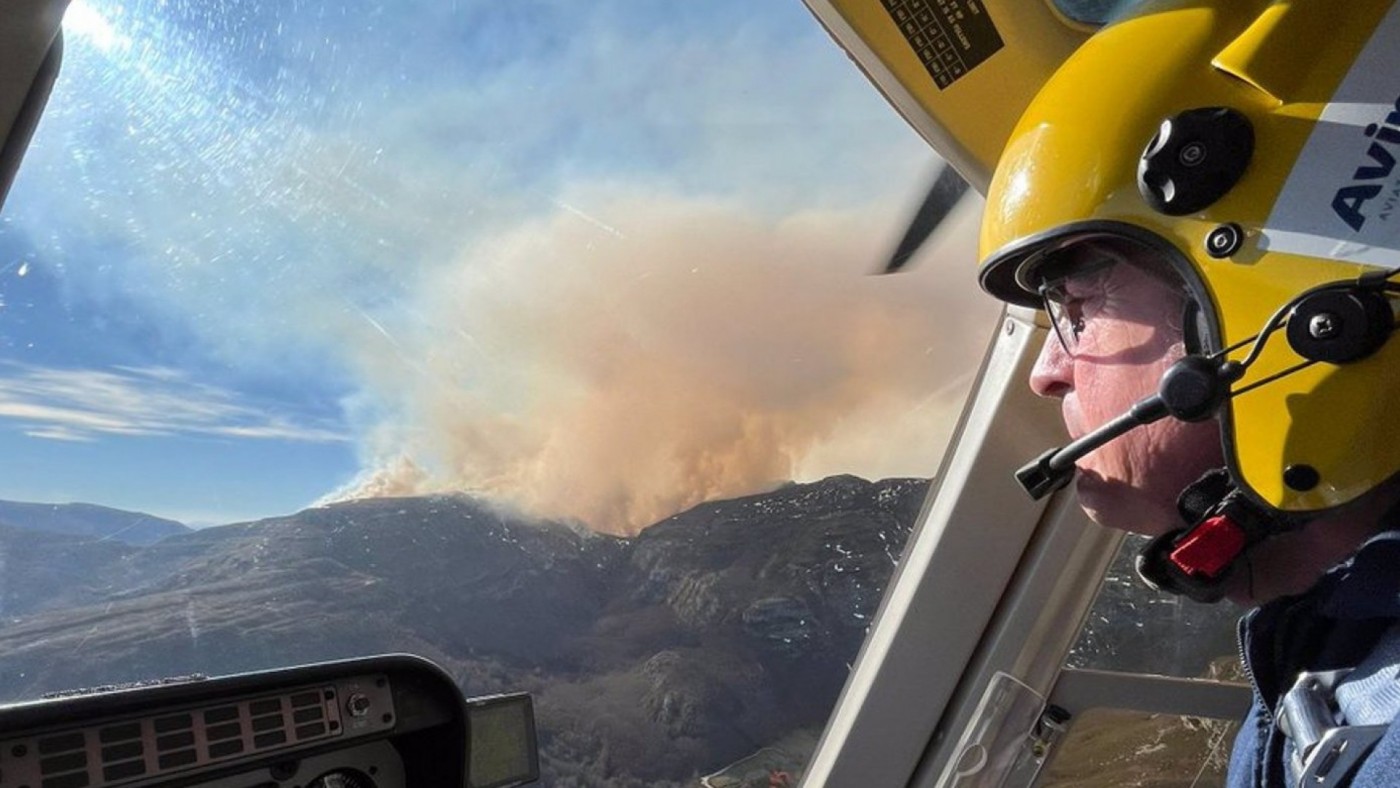
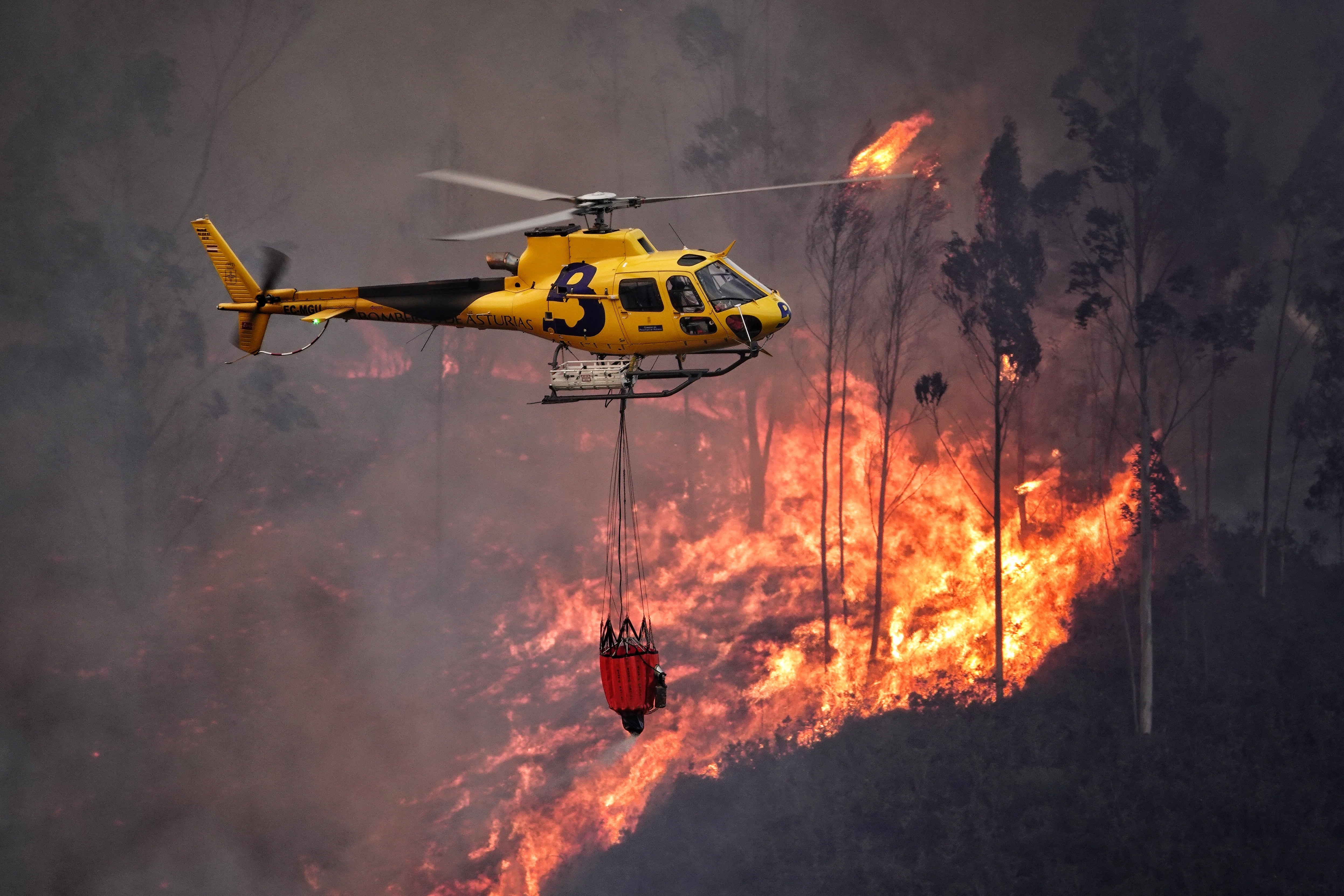
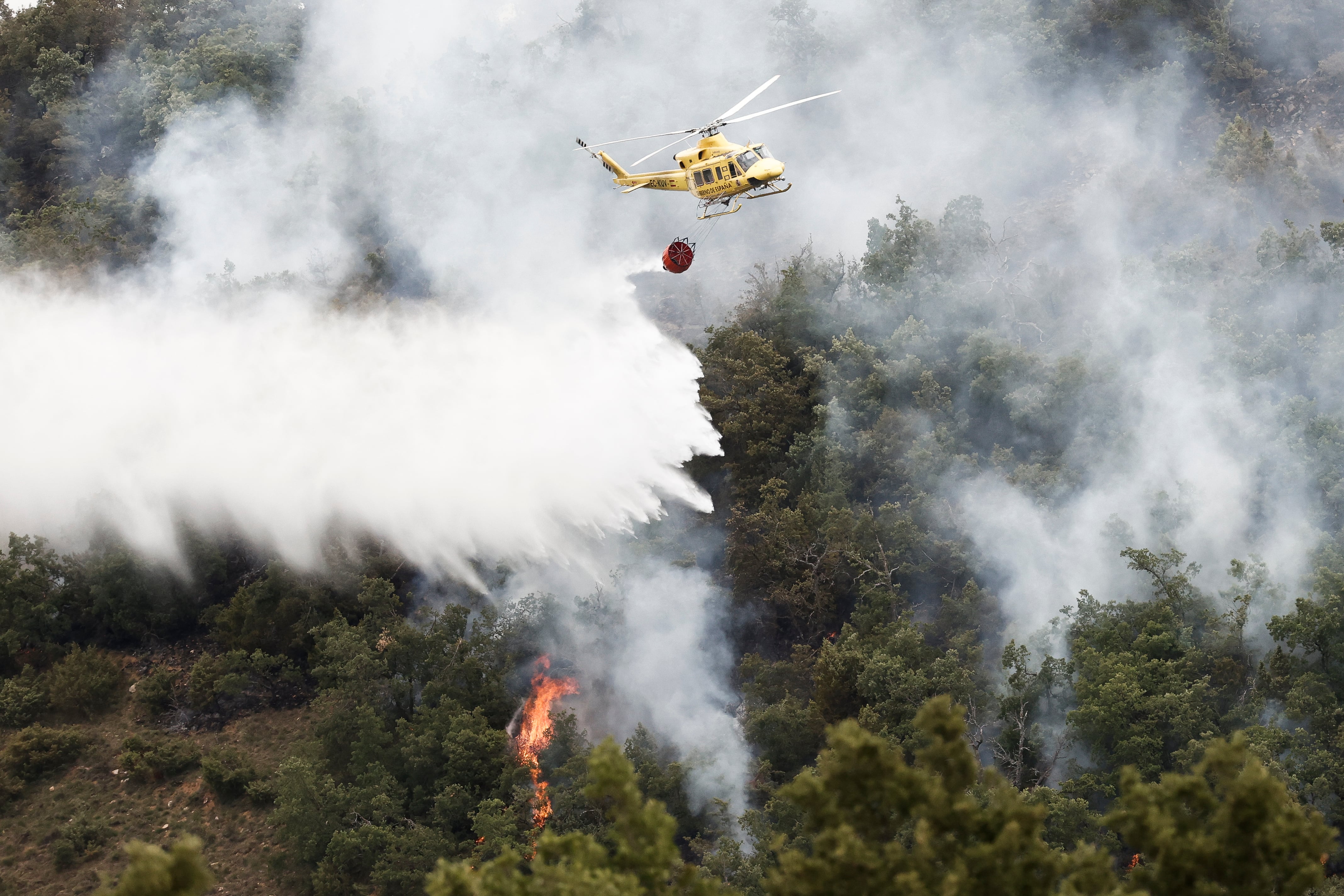
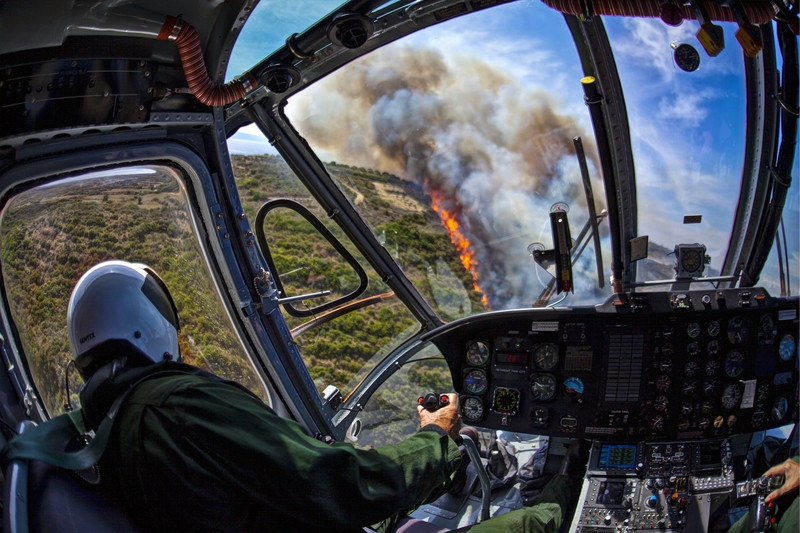
Every summer, Spain looks upwards. As flames advance through woodland and smoke blots out familiar skylines, yellow aircraft and helicopters suddenly become symbols of collective defence. Yet the people at the controls remain curiously invisible. We recognise the manoeuvre, the precision drop and the suspended bucket, but seldom understand the long professional route that places a pilot above a fire front.
That gap between public dependence and public awareness was exposed by a survey released by European Flyers and IO Investigación around World Forest Fire Prevention Day on 18 August. Of 1,215 Spanish respondents aged 16 to 29, 45.3% were unaware that civilian pilots could build careers in firefighting, rescue or medical emergencies. Some 58.2% could not name professional alternatives beyond commercial airlines. Only 24.8% had considered flying helicopters, despite their prominent role in emergency medical services, mountain rescue and wildfire response.
The figures are telling, though they require responsible interpretation. The publicly available articles identify the sample size and age range but do not provide a complete methodological sheet detailing fieldwork dates, sampling procedures, questionnaire wording or margin of error. The findings should therefore be attributed to the commissioned survey rather than presented as an unquestionable portrait of an entire generation. That caveat does not erase the central paradox: society relies on emergency aviation while career guidance continues to frame “pilot” almost exclusively as an airline occupation.
The timing was hardly accidental. By 11 August 2026, official figures communicated by Spain’s ecological transition minister referred to more than 226,000 hectares affected by fire and 43 major forest fires. Such seasons expose not only the shortage of aircraft but also the scarcity of suitably qualified crews. Training cannot be improvised after an emergency begins. A pilot able to operate near smoke, mountainous terrain, power lines, intense heat and turbulent air is the result of years of licensing, hour-building, type training and operator conversion.
This is where attractive headlines can become misleading. There is no beginner’s licence called “firefighting pilot”. For fixed-wing operations, a candidate first needs at least a commercial aeroplane licence, a Class 1 medical certificate and appropriate language competence. For helicopter work, the foundational qualification is normally the CPL(H). After that come aircraft ratings, pilot-in-command experience, mountain or low-level flying, external-load procedures and the employer’s operational course. Titan Firefighting, an operator and approved training organisation, recommends substantial VFR command experience and warns that an Air Tractor AT-802 rating merely qualifies a person to fly the aircraft; it does not, by itself, qualify that pilot to fight a wildfire.
The distinction matters because technical proficiency is only one layer of the job. Emergency flying requires disciplined risk assessment, communication with crews on the ground, rapid interpretation of changing weather and the willingness to abort when a mission becomes unsafe. A water drop that looks heroic from below may be the outcome of a deliberately conservative decision-making process. In aviation, courage without judgement is not bravery; it is a hazard.
Cost is another uncomfortable part of the story. Published 2026 prices place an integrated commercial helicopter course at approximately €64,500 at European Flyers and €71,850 for one configuration at World Aviation Group. Advanced programmes including instrumental training can exceed €120,000. Fixed-wing integrated programmes also commonly sit above €70,000. These figures may exclude medical examinations, accommodation, examination fees, additional flight hours or later ratings. Before paying a deposit, applicants should verify that the exact course and organisation appear on the Spanish Aviation Safety Agency’s current ATO list, request a written itemised quotation and obtain the Class 1 medical first.
Nevertheless, the cockpit is only the most visible part of a much larger professional ecosystem. Emergency aircraft need turbine and avionics technicians, dispatchers, meteorological support, forest managers, drone operators, logistics staff and emergency coordinators. Spain’s official VET system includes Higher Technician programmes in Turbine-Powered Helicopter Aeromechanical Maintenance, Turbine-Powered Aeroplane Aeromechanical Maintenance, Aircraft Electronic and Avionic Systems, Emergency and Civil Protection Coordination, and Forest and Environmental Management. These routes do not turn a student into a pilot, but they can lead directly into the same mission-critical sector at a fraction of private flight-training costs.
For VET students, Erasmus+ adds a crucial international dimension. A placement abroad can expose a learner to different maintenance cultures, safety-management systems, aircraft fleets, environmental strategies and workplace English. Erasmus+ supports traineeships abroad, while the precise eligibility route depends on the educational level and the project managed by the student’s institution. The sensible first step is not to buy a ticket independently, but to contact the school’s Erasmus coordinator, examine its accredited projects and agree a recognised learning programme.
The labour market is real rather than hypothetical. Spain’s 2025–2027 state contract for aerial support names operators including Avincis, Pegasus Aviación, Rotorsun, Sky Helicópteros, Martínez Ridao Aviación and Air Attack on Fire Europe. Work may initially be seasonal, and a new licence is not a guarantee of immediate employment. Applicants often build relevant hours through instruction, survey work, coordination flights or other aerial operations before moving into wildfire response, HEMS or search and rescue.
There is, finally, a wider lesson for career education. Young people cannot choose a profession they have never been shown. If schools discuss aviation only through the airline cockpit, they conceal an entire network of socially essential careers. Better guidance should neither romanticise danger nor discourage ambition. It should reveal the route, the cost, the medical requirements, the years of experience and the alternatives available through VET. When the sky turns orange, society suddenly remembers these professionals. Our education system should remember them long before the first spark.
Reading comprehension
Choose the answer that best reflects the text. Each correct answer earns 2 points and 20 XP.
Use of English: control under pressure
A. Open cloze
B. Key-word transformations
Complete with the missing words only. Contractions are accepted where indicated.
_____ the complexity of aerial firefighting.
A type rating alone _____ qualified for firefighting.
You _____ the medical certificate first.
It _____ that the shortage became apparent.
In _____, demand remains strong.
The specialist training _____ by the operator.
Fireline vocabulary deck
Listen, repeat, then cover the definition and retrieve it. Every English definition contains Spanish hover support.
The aerial release of water or retardant.
The advancing leading edge of a wildfire.
Aircraft that use rotating blades, such as helicopters.
An aeroplane whose wings do not move to create lift.
A substance used to slow the spread of fire.
A collapsible container carried beneath a helicopter.
One operational flight or mission departure.
Accumulating relevant flight experience after licensing.
Formal qualification for a specific aircraft type.
Employer training for its aircraft and procedures.
The decision and process of sending an aircraft to a mission.
Accurate understanding of a changing operational environment.
Vocabulary retrieval check

Operational briefing: “No drop is compulsory”
First listen for the message. Second listen for detail. The script unlocks after you check your answers.
Listening 1 script
Good morning, crews. The wind is expected to strengthen from the west after midday, and smoke may reduce visibility along the northern flank. Your primary task is to support the ground teams protecting the access road, but no drop is compulsory. If the approach becomes unstable, break away early and report the reason. We need accurate observations as much as we need water.
Before entering the circuit, confirm that the previous aircraft has cleared the area and maintain the separation assigned by air coordination. Helicopter crews should pay particular attention to unmarked cables near the reservoir. Fixed-wing crews are reminded that the eastern loading point is temporarily unavailable. Use the southern base until further notice.
Fatigue must be reported. A pilot who identifies a personal limit is protecting the operation, not delaying it. Safety remains the first objective; effective firefighting is possible only when crews, aircraft and procedures remain intact.
Erasmus+ placement interview
Listening 2 script
Interviewer: Why are you applying for this maintenance placement?
Candidate: My higher VET course has given me a strong foundation in turbine systems, but I want to experience a different safety culture and use technical English every day.
Interviewer: What do you expect to do in the hangar?
Candidate: I expect to observe first, follow the supervisor’s instructions and carry out only the tasks I am authorised to perform. I would rather ask twice than make an assumption near an aircraft.
Interviewer: How will the placement support your career?
Candidate: It should help me connect classroom procedures with real maintenance documentation. I am also interested in how operators prepare emergency fleets before the wildfire season.
Interviewer: What would you do if you noticed a discrepancy?
Candidate: I would stop, record what I had observed and report it through the proper chain. I would not try to hide or correct it without authorisation.
Interviewer: And what can you contribute?
Candidate: Reliability, careful communication and a willingness to learn. I do not expect Erasmus+ to hand me a job. I expect it to make me more competent and more aware of the standards the job requires.
Choose a route, not merely a dream
| Goal | Foundation | Likely next layers | Reality check |
|---|---|---|---|
| Fixed-wing firefighting | CPL(A), Class 1 medical, ICAO English | Aircraft class/type, mountain or low-level experience, operator conversion | Relevant command experience matters; a rating alone is insufficient. |
| Helicopter firefighting | CPL(H) | PIC hours, aircraft type, mountain flying, external load, operator course | Entry thresholds depend on operator and contract. |
| HEMS | CPL(H) | IR, multi-engine, multi-crew and operator-specific HEMS training | Highly procedural; substantial experience is commonly expected. |
| SAR | Civil or military route | IFR, night, multi-engine, hoist and crew coordination | Among the most demanding profiles. |
| Emergency aviation technician | Relevant Higher VET | Part-66/Part-147 pathway where applicable, workplace experience, type training | VET is not a pilot licence, but it serves the same operational ecosystem. |

2026 published training prices: orientation, not a quotation
| Provider | Programme | Published reference | Location |
|---|---|---|---|
| European Flyers | Integrated CPL(H) | €64,500 | Madrid / Alicante |
| World Aviation Group | Integrated CPL(H), Cabri configuration | €71,850 | Madrid / Málaga / Girona |
| World Aviation Group | Integrated ATPL(H) with IR | €122,800 | Consult provider |
| European Flyers | Advanced helicopter/IR programme | €135,000 | Madrid / Alicante |
Before paying: obtain the medical certificate, verify the exact course on the current AESA ATO register, request an itemised written price, identify excluded hours and fees, and ask for verifiable operator pathways rather than vague “employability” claims.
You do not need to sit in the cockpit to protect the forest
| Spanish Higher VET route | Professional contribution | Examples of study locations |
|---|---|---|
| Turbine-Powered Helicopter Aeromechanical Maintenance | Rotorcraft structures, turbine systems and maintenance | CIFP Aguas Nuevas; CIFP Nº 1 Santander; Cheste; IES La Vall d’Alba; ADA Sevilla |
| Turbine-Powered Aeroplane Aeromechanical Maintenance | Fixed-wing turbine fleets and maintenance operations | Madrid, Albacete, Valencia, Barcelona, Santander, Zaragoza and other regions |
| Aircraft Electronic and Avionic Systems Maintenance | Navigation, communication, instruments and electronic systems | Consult the national and regional FP registers |
| Emergency and Civil Protection Coordination | Incident planning, communications, logistics and resource coordination | Centres across several autonomous communities |
| Forest and Environmental Management | Prevention, forestry, restoration and wildfire management | Widely available across Spain |
| Remotely Piloted Aircraft specialisation | Observation, mapping, thermal data and risk assessment | Specialisation courses attached to eligible Higher VET programmes |
Erasmus+ can support traineeships abroad. Higher VET mobility is normally handled within the education pathway applicable to the institution, while other VET learners follow the programme’s VET mobility route. Always use the call and guidance issued by your centre and SEPIE. Explore the European Commission’s official information on traineeships abroad.
Can you separate evidence from advertising?
Opinion article: invest before the next fire
Write 220–260 words.
Your regional education authority wants to improve guidance about emergency and environmental careers. Write an article arguing which measures would most effectively attract and prepare young people for aerial emergency services. Consider training costs, VET routes, safety, industry partnerships and Erasmus+ placements.
Honest C1 self-assessment · 4 points each
Calculate your C1 mission result
Objective examination: 80 points. Writing self-assessment: 20 points.
C1 Emergency Aviation Mission
This certifies that
completed FIRELINE PILOTS with a score of 0/100.
Interactive practice certificate · not an official language qualification
🔔 Follow NeuroEnglish for You!
Free C1 English, PAGS, FP Dual, VET, aviation and neurolearning missions.
Primary and specialist sources
- Main journalistic source: Esther Apesteguía, “Piloto de emergencias, una profesión desconocida” — Fly News.
- Luis Miñano on emergency-pilot training and the European Flyers/IO Investigación survey.
- MITECO: national wildfire prevention and suppression resources.
- Titan Firefighting: requirements, experience and AT-802 training distinction.
- BOE: aerial firefighting support contracts for 2025–2027.
- ATAIRE: Spanish aerial work and emergency operators.
- TodoFP: Higher Technician in Turbine-Powered Helicopter Aeromechanical Maintenance.
- CIFP Aguas Nuevas: helicopter maintenance programme and professional outcomes.
- European Commission: Erasmus+ traineeships abroad.
- SEPIE: Erasmus+ and vocational education and training.
Editorial note: prices and course availability change. Verify every figure with the provider and every approval with AESA before enrolment. Survey findings are attributed to the commissioning organisations because a full public methodology sheet was not located.
Help another future professional look beyond the airline
NeuroEnglish for You!
C1 · PAGS · VET · FP Dual · Aviation English · Erasmus+
#NeuroEnglish #AviationEnglish #TodoFP #FPDual #ErasmusPlus #Wildfire #EmergencyAviation

No hay comentarios:
Publicar un comentario