
MISSION TO MARS — THE B2–C1 GRAMMAR CHALLENGE
🚀 Mission to Mars: Advanced Clauses, Modals & Conditionals
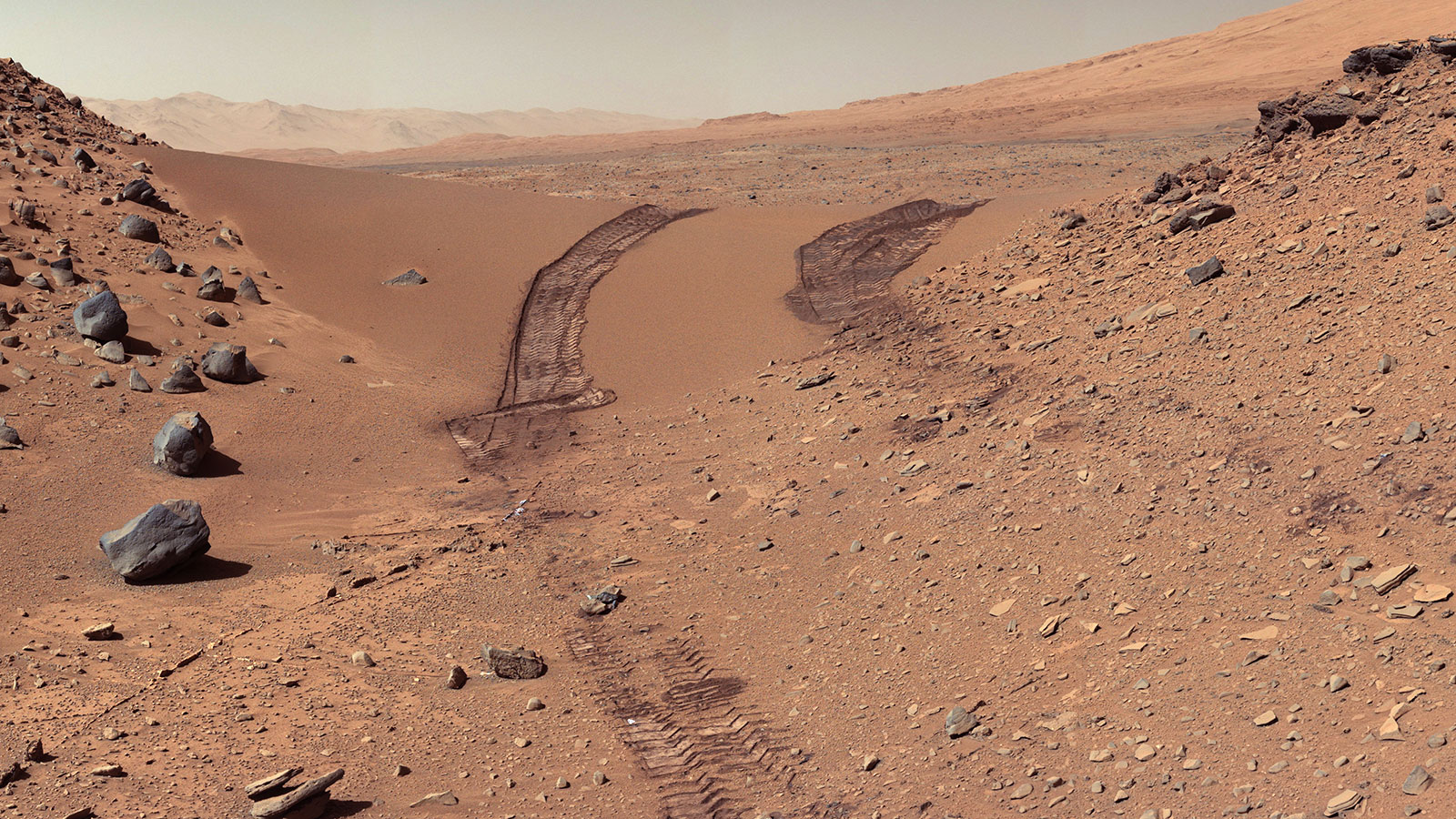
Imagen: NASA/JPL-Caltech/MSSS · Mars Facts — NASA
🧠 Neuro-Fact: Contexto Temático
Practica paso a paso con una misión ficticia. La narración no describe un lanzamiento real ni confirma vida en Marte. Responde antes de abrir las pistas, comprueba tus errores y repite los ejercicios que necesites. Nivel orientativo B2–C1; los tiempos sugeridos son flexibles.
1. Priming: Space Vocabulary ⏱️ 4 min
🌍 Traducir
🌍 Traducir
🌍 Traducir
🌍 Traducir
🌍 Traducir
🌍 Traducir
🌍 Traducir
🌍 Traducir
2. Reading: Mission to the Red Planet ⏱️ 12 min
🎧 Neuro-Listening: Lee y escucha a la vez. ¡Fíjate en los condicionales y conectores!
I What an incredible journey it has been! Since we first looked up at the stars, mankind has dreamed of reaching new worlds. Yesterday, the Ares V spacecraft was successfully launched from Earth, carrying a brave crew towards Mars. By the time they arrive, they will have travelled for more than seven months.
II The preparation for this mission was so complex that scientists spent two decades designing the life-support systems. In order to survive the harsh conditions of the Red Planet, the astronauts have been training in isolated deserts. The mission director explained that they had to create new technology so that the crew could produce their own oxygen. If the life-support system fails, the backup will activate immediately.
III Although Mars is currently uninhabitable for humans without life support, experts believe it holds the key to our future. Despite the obvious dangers, millions of people applied to join the mission. However, only six were selected due to the strict physical and psychological requirements. They were chosen because they possess unique skills to overcome any crisis. If they had not passed the psychological tests, they would not have been chosen.
IV Once they land, the first task will be to establish a base. What will they find? They might discover ancient bacteria beneath the surface. Scientists are convinced that there must have been oceans of liquid water billions of years ago. It can't be completely dead. As soon as the first samples are analyzed, we will learn more about the planet.
V The commander of the mission, who is a veteran of the Space Station, transmitted a message just before leaving Earth's orbit. He said, "How small our planet looks from here! We are doing this to ensure that humanity can expand beyond its origins."
3. Reading Comprehension ⏱️ 10 min
A. True or False? (Find evidence)
- 1. The astronauts will arrive on Mars in less than half a year.
Pista y explicación
Check Paragraph I: Look for the exact travel time. - 2. Only a few people wanted to participate in this dangerous mission.
Pista y explicación
Check Paragraph III: How many people applied? - 3. In this fictional story, scientists strongly believe that liquid water existed on Mars in the past.
Pista y explicación
Check Paragraph IV: Look for the modal of deduction they use about oceans.
B. Find Synonyms (Interactive)
Busca en el texto palabras que signifiquen lo mismo. Pincha para ver la solución.
🧠 Brain Break (Pausa Activa)
¡Has completado el despegue! Antes de enfrentarnos a la gravedad cero de la Gramática, mira a un punto lejano por la ventana durante 20 segundos y descansa un momento en una posición cómoda.
Grammar 1: The Master of Clauses 🧩
Elige la opción correcta para completar estas frases sobre la misión espacial:
-
1. The astronauts trained for years they would be ready for anything.
a) in order to b) so that c) because ofPista y explicación
Purpose. Detrás del hueco hay Sujeto + Verbo (they would be). -> so that. -
2. the dangerous radiation, they must wear special suits.
a) Although b) Since c) Due toPista y explicación
Reason. Detrás del hueco hay un sustantivo (the dangerous radiation). -> Due to. -
3. The rocket was fast that it left Earth's orbit in minutes.
a) so b) such a c) tooPista y explicación
Consecutive. Detrás del hueco hay SOLO un adjetivo (fast). -> so. -
4. They will start building the base they land on Mars.
a) as soon as b) because of c) despitePista y explicación
Time. Significa "tan pronto como". -> as soon as. -
5. feeling exhausted, the crew continued working.
a) Because b) Despite c) HoweverPista y explicación
Contrast. Detrás del hueco hay un Verbo en -ing (feeling). -> Despite. -
6. We are exploring the universe find a new home.
a) so that b) for c) in order toPista y explicación
Purpose. Detrás del hueco hay un Infinitivo (find). -> in order to. -
7. The engineers designed a stronger shield the ship wouldn't melt upon re-entry.
a) so that b) in order to c) due toPista y explicación
Purpose. Detrás del hueco hay Sujeto + Verbo negativo (the ship wouldn't). -> so that. -
8. microgravity, astronauts lose muscle mass quickly.
a) Because b) Due to c) SincePista y explicación
Reason. Detrás del hueco hay un sustantivo (the lack of gravity). -> Due to. -
9. The storm was severe that communication with Earth was lost.
a) so b) such a c) tooPista y explicación
Consecutive. Detrás del hueco hay SOLO un adjetivo (severe). -> so. -
10. We will celebrate our victory we take the first steps on Mars.
a) as soon as b) because of c) despitePista y explicación
Time. Significa "tan pronto como". -> as soon as. -
11. the space food is tasteless, it provides all the necessary nutrients.
a) Despite b) Even though c) HoweverPista y explicación
Contrast. Detrás del hueco hay Sujeto + Verbo (the space food is). -> Even though.
Grammar 2: Modals of Deduction & Modal Perfects 🔮
Deducción afirmativa fuerte
Posibilidad, sin porcentaje fijo
Deducción negativa fuerte
Reescribe las oraciones usando Modales o Modales Perfectos:
-
1. I am sure the astronauts are terrified right now.
The astronauts terrified right now.Pista y explicación
Presente + Certeza = must be. -
2. It is impossible that they saw aliens on Mars!
They aliens on Mars!Pista y explicación
Pasado (saw) + Deducción negativa = can't have seen / couldn't have seen. -
3. Perhaps the spaceship suffered a mechanical failure.
The spaceship a mechanical failure.Pista y explicación
Pasado (suffered) + Posibilidad = might have suffered. -
4. I am completely sure they landed safely yesterday.
They safely yesterday.Pista y explicación
Pasado (landed) + Certeza = must have landed. -
5. It was a mistake for the captain to ignore the warning. (Crítica)
The captain the warning.Pista y explicación
Crítica de algo mal hecho en el pasado = should not have ignored (no debería haber ignorado). -
6. I am sure the alien bacteria died millions of years ago.
The alien bacteria millions of years ago.Pista y explicación
Pasado (died) + Certeza = must have died. -
7. It is impossible that you heard a noise outside the ship while it was in a vacuum!
You a noise outside the ship while it was in a vacuum!Pista y explicación
Pasado (heard) + Imposibilidad (0%) = can't have heard / couldn't have heard. -
8. Perhaps the rover got stuck in the red sand.
The rover stuck in the red sand.Pista y explicación
Pasado (got) + Quizás (50%) = might have got/gotten. -
9. I am sure the commander is sleeping in his cabin right now.
The commander in his cabin right now.Pista y explicación
Presente continuo + Certeza = must be sleeping. -
10. It was a bad idea for you to open the airlock without a helmet. (Crítica)
You the airlock without a helmet.Pista y explicación
Crítica de algo mal hecho en el pasado = should not have opened (no deberías haber abierto).
Grammar 3: Exclamatives & Relatives 💫
📝 Exclamative Rules
WHAT (A) + Noun Phrase
¡Qué día! -> What a day!
¡Qué estrellas tan bonitas! -> What beautiful stars!
HOW + Adjective/Adverb
¡Qué bonito! -> How beautiful!
¡Qué rápido! -> How fast!
🔗 Relative Clauses
- 👤 WHO / THAT: Personas
- 📦 WHICH / THAT: Cosas o Animales
- 📍 WHERE: Lugares (En los que ocurre algo)
- ⏰ WHEN: Tiempos (Días, años...)
- 🔑 WHOSE: Posesión (Cuyo / Cuya)
*Usa comas (,) si añades información extra que se puede borrar (Non-Defining). En esos casos, NO puedes usar "that".
-
1. Mars is incredibly cold! (Make an exclamative with HOW)
Mars is!Pista y explicación
How + adjetivo = How cold. -
2. It was a very dangerous mission! (Make an exclamative with WHAT)
it was!Pista y explicación
What a + adj + noun = What a dangerous mission. -
3. The spaceship is arriving tomorrow. It cost billions of dollars. (Relative Clause)
The spaceship, , is arriving tomorrow.Pista y explicación
Se refiere a una cosa (spaceship). Sustituye "It" por el relativo de cosas. -> which cost billions of dollars. -
4. The astronaut was chosen for the mission. His father is my friend. (Relative Clause)
The astronaut was chosen for the mission.Pista y explicación
Posesión (His father). Usa el relativo de posesión. -> whose father is my friend. -
5. The galaxy is absolutely enormous! (Make an exclamative with HOW)
the galaxy is!Pista y explicación
How + adjetivo = How enormous. -
6. It was a terrifying experience! (Make an exclamative with WHAT)
it was!Pista y explicación
What a + adj + noun = What a terrifying experience. -
7. The spacesuit is broken. I wore it yesterday. (Relative Clause)
The spacesuit is broken.Pista y explicación
Se refiere a una cosa. "Que yo llevé ayer". -> which/that I wore yesterday. -
8. The scientist discovered the new planet. We met him on Tuesday. (Relative Clause)
The scientist discovered the new planet.Pista y explicación
Se refiere a una persona que es el objeto de la frase. -> who/whom/that we met on Tuesday. -
9. We landed in the crater. We found ice there. (Relative Clause)
We landed in the crater .Pista y explicación
Lugar ("there"). -> where we found ice.
Grammar 4: Conditional Sentences (0, 1st, 2nd & 3rd) 🌌
⚖️ La Lógica de los Condicionales
If + Present, Present.
If you heat ice, it melts.
If + Present, Will + Inf.
If it rains, we will stay.
If + Past, Would + Inf.
If I were you, I would go.
If + Past Perf, Would have + Participle.
If I had studied, I would have passed.
⚠️ Cuidado: Unless = If ... not (A menos que).
Completa las frases con el tiempo verbal correcto para formar el condicional adecuado:
-
1. If I the commander of this spaceship, I would land near the crater.
Pista y explicación
Second Conditional: were es la opción habitual en el inglés formal hipotético. Was también se usa en registros informales con I/he/she/it. -
2. If they water on Mars yesterday, the mission would have failed.
Pista y explicación
Third Conditional (Situación imposible en el pasado: "yesterday"). Necesitas Past Perfect Negativo -> had not found. -
3. Unless the solar storm soon, we won't go outside to explore.
Pista y explicación
First Conditional (Futuro probable). "Unless" ya es negativo ("A menos que"). Necesitas Presente Simple -> stops. - 4. If you heat ice above its melting point, it .
Pista y explicación
Zero Conditional: Present Simple en ambas partes. Sujeto singular: melts. -
5. We would travel to other galaxies if we faster spaceships.
Pista y explicación
Second Conditional (Sueño hipotético ahora mismo). La otra mitad lleva "would travel", así que aquí necesitas Past Simple -> had. -
6. If the oxygen levels further, the alarms will ring.
Pista y explicación
First Conditional (Futuro probable). "will ring" en la principal, necesitas Presente Simple -> drop. -
7. If we had brought more fuel, we Jupiter.
Pista y explicación
Third Conditional (Imposible en el pasado). "had brought" (Past Perfect), necesitas Would + have + Participle -> would have explored. -
8. I wouldn't touch that alien rock if I you.
Pista y explicación
Second Conditional (Hipotético/Consejo). "wouldn't touch", necesitas Past Simple. Recuerda usar were. -
9. Unless the mechanic the engine, we will be stranded here forever.
Pista y explicación
First Conditional. "Unless" funciona como un "If" negativo. La segunda parte lleva "will", así que necesitas Presente Simple -> fixes. -
10. If a star goes supernova, it massive amounts of energy.
Pista y explicación
Zero Conditional (Hecho científico 100% real). "goes" está en presente, la segunda parte también -> releases.
Writing: A Captain's Log 🧑🚀 ⏱️ 30 min
Topic: Write a blog entry or diary entry (Captain's Log) describing your first day on Mars. Use at least one exclamative sentence, two clauses (time, contrast, reason...), one modal of deduction and one conditional sentence (If...). (120-150 words)
🏗️ Structure
- Header: Date / Location (e.g., Captain's Log: Day 1. Mars Base.)
- Intro: How do you feel? Describe the landing (exclamative!).
- Body: What did you do today? (Use time clauses: As soon as we landed...). What were the challenges? (Contrast: Although it was cold...).
- Conclusion: Your hopes/deductions for tomorrow. (We might find... / If we survive the night, we will...).
🔥 Power Vocab
- Exhausted but thrilled.
- A breathtaking landscape.
- We managed to overcome the technical issues.
- It must be the quietest place in the universe.
- What a historic moment!
0 palabras · objetivo 120–150
Ver un modelo de writing
What a breathtaking day it has been! As soon as we landed, I checked the oxygen supply and helped the crew carry equipment into our shelter. Although everyone was exhausted, we worked carefully because a single mistake could put the mission at risk. The landscape was silent and beautiful, but the cold reminded us that we were far from home. Later, our rover stopped near a rocky crater. It must have hit a hidden stone, so the engineer inspected its wheels before restarting it. If the weather remains calm tomorrow, we will collect our first samples. We might discover evidence of ancient water, although nobody expects an easy answer. Tonight, I feel proud of our teamwork and grateful for the training that brought us here.
La revisión comprueba extensión y tu checklist. El contenido, la gramática y la calidad requieren revisión del docente.
✅ Before you send...
🌟 Rate this Mission
¿Te ha resultado útil esta Masterclass?
🧠 Mini-Reflexión Final:
Piensa durante 10 segundos: ¿Cuál de las gramáticas de hoy te ha parecido más fácil y cuál tienes que repasar más? Conocer tus puntos fuertes es vital.

No hay comentarios:
Publicar un comentario