

NeuroEnglish for You! · Description, interpretation and museum plans
Museum After Hours
B2 Art, Invitations and What a Picture Shows · 30–45 minutes
Plan an exhibition visit and describe art precisely. A visible feature, an interpretation and an attribution answer different questions.
Read, listen and notice
Pasa el ratón, toca una frase o usa Tab y Enter para ver la traducción. El audio utiliza las voces de tu dispositivo y se activa solo al pulsar Escuchar.
English · Voz del dispositivo
The curator places a portrait beside an abstract painting.La comisaria coloca un retrato junto a una pintura abstracta.
In the portrait, a chair appears in the foreground.En el retrato aparece una silla en primer plano.
The blue background may evoke a quiet atmosphere for one viewer.El fondo azul puede evocar una atmósfera tranquila para un espectador.
That response is an interpretation rather than proof of the artist’s intention.Esa respuesta es una interpretación, no una prueba de la intención del artista.
Would you like me to book a ticket for the exhibition?¿Quieres que reserve una entrada para la exposición?
I would prefer to go later, although I can meet you at six.Preferiría ir más tarde, aunque puedo quedar contigo a las seis.
Reading detective · Find the evidence
Answer in your own words. Identify the sentence that supports your answer before checking the model.
1. What is visible in the foreground?
Model answer
A chair.
2. Why does may evoke matter?
Model answer
It allows for a response without claiming that every viewer feels the same or that the artist intended it.
Grammar workshop · Retrieve the pattern
1. Would you like me ___ book a ticket?
Model and reason
to — Would like + objeto + to-infinitivo.
2. I would prefer ___ go later.
Model and reason
to — Prefer to + infinitivo.
3. The painting may ___ (evoke) a quiet atmosphere.
Model and reason
evoke — May + infinitivo sin to.
Speak, write and transfer
Planifica una exposición ficticia; justifica la selección de obras y distingue descripción formal, interpretación y atribución.
Usa al menos cinco palabras del banco del juego. Planifica sin escribir frases completas, habla durante un minuto y luego redacta tu versión. Comprueba si otra persona entiende la idea, los tiempos y los conectores.
Readings & resources
Buenas tardes, estimados alumnos.
Comenzamos una serie de ejercicios dedicados a revisar los puntos principales del programa del curso.
Hoy toca: Arts, museums and culture.
Nota: Los textos están seleccionados tanto del programa CREA como de otras fuentes, a quienes doy las gracias y cito, pero todos tienen el nivel del curso.
Texto nº 1:
Do you want me to get your ticket?
Joe: So,what shall we do today?
Peter: I’d like to go to the video games exhibition at the MOMA*.
Joe: Oh, no, I don’t fancy that.
Peter: Oh, go on. I really want to see it. There's Pac-Man and Space Invaders. And I’d love you to come with me.
Joe: Oh, alright. How much is it?
Peter: Let me check on internet. Right, it’s $8, but there's a discount for pensioners -only $5.
Joe: I’d prefer it if we went a bit later, at 6 o’clock.
Peter: Great, I’ll see you there at 6. Do you want me to get you your ticket?
Joe: OK, and I’ll pay for pizza afterwards.
Peter: See you there.
*MOMA: Museum of Modern Art
Texto nº 2:
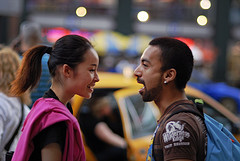 |
A: What are you up to?
B: Nothing much. I'm bored.
A: Well, let's do something fun. What about going to the swimming pool?
B: No, that's too tiring.
A: OK, I know, let's go to the cinema.There's a new film, Tarantula. It's supposed to be really frightening.
B: Too frightening, I heard. Mary said she was scared to death. Anyway, I haven't got any money.
A: You're not exactly being very positive, are you?
B: Well, sorry,it's just so boring here.
A: Well, let's do something fun then!
 |
| https://stacker.com/stories/12763/pablo-picasso-life-story-you-may-not-know |
Texto nº 3:
Pablo Picasso: The life story you may not know
Sources & further reading
Keep exploring
 Sport and the Story
B1 · Narrative, contrast and responsible headlines
Seguir aprendiendo → Career Starter Studio
B1 · Applications, evidence and interview answers
Seguir aprendiendo →Hazte seguidor de NeuroEnglish for You! Pulsa Seguir en el bloque Seguidores para continuar aprendiendo.
B2 · Final vocabulary game · 25 palabras y expresiones
Museum After Hours
Estudia las palabras en contexto y revisa el banco. Después ciérralo e intenta recuperarlas. El orden cambia en cada partida. Puedes usar pistas y volver a practicar las palabras señaladas.
Banco de estudio · 25 parejas
- exhibition
- exposición
- curator
- comisario de una exposición
- collection
- colección
- portrait
- retrato
- landscape
- paisaje pictórico
- sculpture
- escultura
- canvas
- lienzo
- brushstroke
- pincelada
- composition
- composición artística
- foreground
- primer plano
- background
- fondo de una imagen
- perspective
- perspectiva visual
- texture
- textura
- shade
- tono de color
- contrast
- contraste
- abstract
- abstracto
- figurative
- figurativo
- interpretation
- interpretación
- attribution
- atribución de autoría
- authenticity
- autenticidad
- masterpiece
- obra maestra
- installation
- instalación artística
- display
- exhibir
- depict
- representar visualmente
- evoke
- evocar
Listo para empezar. Sin cuenta atrás ni penalización por tardar.
El reto aparece aquí al pulsar Empezar.

No hay comentarios:
Publicar un comentario