Resolución de 20 de noviembre de 2025 • Dirección General de F.P. y Educación Permanente
Curso Escolar 2025/2026
Pruebas de Acceso a Grado Superior Andalucía 2026
Modelo basado en Resolución de 20 de noviembre de 2025, de la Dirección General de Formación Profesional y Educación Permanente.
Modelo de examen basado en Resolución de 20 de noviembre de 2025, de la Dirección General de Formación Profesional y Educación Permanente, por la que se convocan las pruebas de acceso a los Ciclos Formativos de Grado Medio y Grado Superior de Formación Profesional en el curso escolar 2025/2026.
PAGS ANDALUCÍA
Competencia: PLURILINGÜE - INGLÉS
Duración
40 minutos
Preguntas Prueba
16 preguntas
Reserva
2 preguntas
Formato
Tipo Test
Nota didáctica: Este modelo incluye 20 preguntas para abarcar más contenidos durante la preparación del examen.
CHOOSE the correct answer:
1. In which sentence is there a direct transfer from Spanish that is incorrect in English?
Explicación: Se pide detectar un error de traducción literal. En inglés, "advice" es un sustantivo incontable; por lo tanto, no puede llevar el artículo "an". Debería ser "some advice" o "a piece of advice".
2. Many students prefer FP because traditional degrees can be too ______. They want more practical action.
Explicación: Vocabulario en contexto. Si los alumnos buscan "practical action" (acción práctica), es porque perciben la alternativa como demasiado "theoretical" (teórica).
3. Choose the correct sentence:
Explicación: Tiempos verbales. El uso de "since" requiere Present Perfect (Have/Has + participio). La opción C es gramaticalmente perfecta.
4. The company hired him because he ______ his professional internship already.
Explicación: Pasado del pasado. Si la contratación (hired) fue en pasado, terminar las prácticas ocurrió antes; por ello se usa Past Perfect (had + participio).
5. Technical skills are vital for the job, ______ soft skills are also necessary.
Explicación: Conectores. Se introducen dos ideas opuestas o complementarias con matiz de contraste. "However" (sin embargo) es el nexo de transición adecuado.
6. Learning new skills while you are already working is known as...
Explicación: Concepto laboral. El término "Upskilling" se refiere a la formación continua de los empleados para adaptarse a nuevas tareas.
7. The demand for technicians is very high. You ______ find a job easily, but you should keep practicing.
Explicación: Verbos modales. El hablante sugiere una posibilidad ("but", pero). "Might" indica probabilidad o posibilidad.
8. He studied a Dual FP program ______ he gained experience in a real company.
Explicación: Conectores de causa/efecto. Estudió el programa, por lo tanto (so) obtuvo la experiencia.
9. Students ______ choose vocational training usually find employment faster.
Explicación: Relativos. Para personas que ejercen la acción de sujeto usamos "who". "Which" se reserva para cosas.
10. In the job interview, there were ______ candidates with a Master's degree, so the competition was high.
Explicación: Cuantificadores. Con sustantivos contables en plural como "candidates", usamos "many" para indicar una gran cantidad.
11. The graduates ______ the ceremony after the principal gave the speech.
Explicación: Pasado simple. Se narra un evento ya concluido en una secuencia temporal. "Left" es el pasado de "leave".
12. ______ having a high university degree, many people are now returning to FP for better luck.
Explicación: Concesión. El uso de gerundio (-ing) tras el espacio en blanco obliga a usar "In spite of" (a pesar de).
Listening Task
Listen to the Podcast about Vocational Training in Andalucia. You will hear it 3 times. Choose the correct options.
Hello everyone, and welcome to today's special edition of 'The Andalusian Career Path Podcast'. My name is Sarah, and today we are exploring a major trend that is transforming our region: the incredible boom of Vocational Training, or 'FP', as we call it in Spain. In recent years, the job market in Andalucia has shifted significantly. Official reports from early 2026 indicate that more than sixty percent of local companies, especially in provinces like Seville, Malaga, and Almeria, are now prioritising candidates with technical degrees over those with general academic backgrounds. But why is this happening so fast? The main reason is the success of the new 'Dual Training' model promoted by the local government. In these programs, students do not just sit in a classroom for two years. Instead, they spend a large part of their time learning in real work environments. We are talking about students training in luxury hotels along the Costa del Sol, working in advanced technology parks in our cities, or participating in aeronautical projects near Seville. Experts and recruiters are very impressed with the results. Statistics show that students who choose these vocational paths find their first stable job much faster than before, often within six months of receiving their diploma. So, if you are planning your professional future, remember that sectors like digital technology, sustainable tourism, and healthcare are currently the most valuable assets in the Andalusian economy. Focus on practical skills and build the successful career you want.
"Hello everyone, and welcome..." (Script is available)
13. Percentage of companies prioritising technical graduates?
Estrategia: Captar cifras. Sarah menciona "more than sixty percent".
14. What defines the 'Dual Training' model?
Estrategia: El término "Dual" implica alternancia entre centro educativo y empresa real.
15. How long to find a stable job?
Estrategia: Detecta el límite temporal: "within six months" (dentro de seis meses).
16. Most valuable sectors today?
Estrategia: Enumeración final de Sarah sobre los sectores punteros.
READ the text and answer the next four questions:
The Rise of Vocational Training in the Modern Economy
In recent years, Vocational Training (FP) has become a central topic in the labor market. Regarding employment and career success, experts from the European Union explain that more than 50% of new jobs require technical qualifications. Although the prestige of university degrees remains, many companies now prefer candidates with practical experience. Digitalization, new technologies, and industrial growth can strongly influence the demand for specialized workers. One important trend is that students are choosing their careers more realistically. This change helps reduce youth unemployment and encourages individuals to focus on specific sectors like IT or healthcare. Besides, governments and companies are starting to include "Dual FP" programs to promote direct contact with the workplace. According to recent reports, vocational education is closely connected to economic growth and innovation. In spite of these positive changes, some sectors still struggle with a lack of specialized staff. Therefore, modernizing the curriculum is essential. Modern habits such as continuous learning, digital literacy, and teamwork improve professional performance. In addition, spending time in real work environments strengthens technical expertise. If necessary, career guidance can provide professional direction for new students. In conclusion, although the global economy presents challenges, choosing vocational paths and adapting to new technologies can protect our professional future and help us build a successful and stable career.
17. According to the text, what is the connection between vocational education and the economy?
Explicación: Localización. El texto dice: "vocational education is closely connected to economic growth".
18. What can be deduced from the fact that students are "choosing more realistically"?
Explicación: Inferencia. "Choosing realistically" (elegir con realismo) se vincula con la reducción del paro juvenil ("reduce youth unemployment").
19. What is the consequence of "digital literacy" and "teamwork" according to the third paragraph?
Explicación: Información literal. Busca estas palabras clave en el párrafo 3: "improve professional performance".
20. What does the conclusion suggest about professional success?
Explicación: Comprensión global. El final del texto subraya que elegir caminos vocacionales y adaptarse a la tecnología garantiza el futuro.
FINAL SCORE / PUNTUACIÓN
0.0 / 10.0
Examen Completo de Preparación
Essential Keywords & Phrasal Verbs
Upskilling
Formación para mejorar competencias actuales.
Vocational Training (FP)
Formación Profesional.
Expertise
Pericia o conocimiento experto.
Bridge the gap
Cerrar la brecha o salvar la distancia.
Workforce
Mano de obra o conjunto de trabajadores.
In spite of / Despite
A pesar de (Conector de concesión).
However
Sin embargo (Conector de contraste).
Healthcare
Sanidad o sector de la salud.
Trend
Tendencia o moda en el mercado.
Lack of
Falta de o carencia.
Enroll / Registration
Matricularse o inscripción.
Internship
Periodo de prácticas profesionales.
Unemployment
Desempleo o paro.
Stable Career
Carrera profesional estable.
Theoretical
Teórico (Opuesto a práctico).
Studying these words will secure your pass in PAGS 2026!
The Strategic Engine: Industrial 'Upskilling' 2026
"Practical Expertise for a Digital Era"
By NeuroEnglishMMP • Updated for PAGS 2026
Learning Roadmap
Est. Time: 45 Minutes
01
The Perspective
02
Upskilling Hub
03
Listening Task
04
VET Vocab
05
Mock Exam
06
Conditionals Fix
07
Skill-Game
Career & VET Vocabulary (English exam PAGS 2026)
Upskilling
Vocational
Expertise
Bridge the gap
Workforce
Shortage
Enroll
Competencies
English exam PAGS 2026 Critical Reading
The Strategic Engine
It is believed that the Spanish labor market is currently undergoing a radical transformation. Not only is the digital era changing our tools, but it is also redefining our career paths. In this context, Higher Vocational Education and Training (VET) is seen as the primary bridge between students and industry.
Efficiency and Corporate Strategy
This modern educational model, which provides students with practical expertise, has become the favorite choice for companies. The relationship between firms and training centers is essential. In fact, many experts suggest implementing more hours of workplace training to ensure that the goal of full employment is met.
The Correlative Rule
"The more companies invest in these cycles, the more productive the economy becomes."
To achieve this, several programs aim to bridge the gap between theory and practice.
Flexibility and New Opportunities
Education is being modernized so that the workforce can adapt to new challenges. Curricular modules are updated constantly in order that the industry remains competitive. Therefore, students are now learning cutting-edge techniques, such as cloud computing and blockchain, which were previously unavailable.
Past Support and Future Talent
The results are clear: if the government had not supported Dual VET in the past, the current talent shortage would have been even worse. Now, new digital tools are provided by the authorities. This ensures that every student, in spite of facing economic difficulties, can succeed. If you had decided to enroll years ago, you would have gained the specific competencies required today.
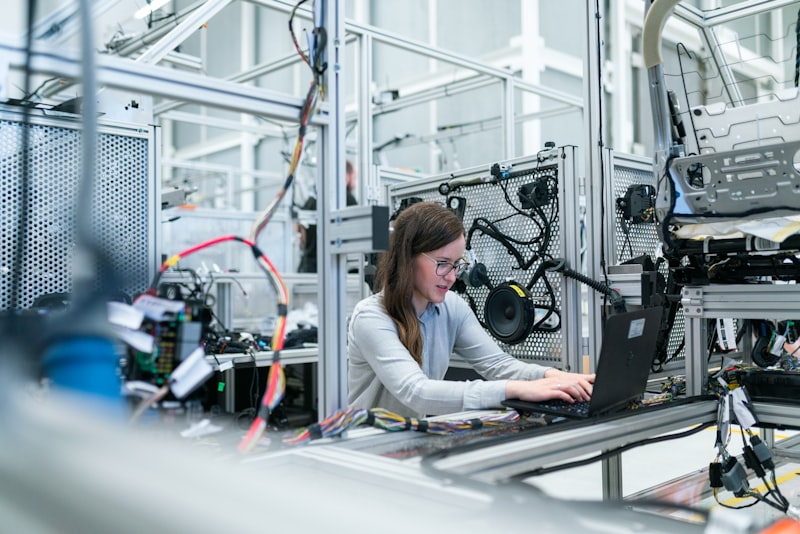
The technician of 2026: A bridge between logic and machinery.
Neuro-Boost: The 4 Cs of Modern VET
Master these pillars for your English exam PAGS 2026 writing!
🛠️
COMPETENCE
Practical skills that companies need.
🔗
CONNECTION
Direct link between school and firm.
📈
CAREER
Faster paths to high-quality jobs.
🚀
CHALLENGE
Adaptation to AI and digital tools.
Listening Track: The Dual Bridge
Interviewer discusses Upskilling with a VET Coordinator.
Interviewer: We're here with Mr. Torres, a VET Coordinator. Mr. Torres, why is vocational training so popular in 2026?
Torres: Well, the labor market has changed radically. Companies no longer want just theory; they need technicians with practical expertise. Not only are we teaching cloud computing, but we are also integrating AI into every module.
Interviewer: What about the "Dual VET" system?
Torres: It’s the primary bridge. Students spend half their time in a real company. The more hours they spend at the workplace, the better they understand the industry's engine. If we hadn't modernized these cycles, our workforce wouldn't be competitive today.
Interviewer: Some say university degrees are still better.
Torres: It depends on your goal. If you want specific competencies and a fast career path, VET is often the favorite choice. Our aim is full employment for our graduates.
Interviewer: Thank you, Mr. Torres.
PAGS 2026 Listening Comprehension
1. Why is VET popular in 2026 according to Torres?
2. How is AI being integrated?
English exam PAGS 2026
Comprehension Mock Quiz (Full Exam)
16 questions with 4 options each, strictly following the official 2026 model.
1. What is the primary bridge to industry in 2026?
2. The transformation of the labor market is defined as:
3. What is "Higher VET" providing to students today?
4. Experts suggest increasing workplace training hours to:
5. What is the correlative effect of companies investing in VET cycles?
6. According to the text, what happened with AI last year?
7. Why are curricular modules updated constantly?
8. Which techniques were previously unavailable to students?
9. What would have happened if the government had NOT supported Dual VET?
10. What is being provided by authorities to support training centers?
11. Why is the labor market redefining career paths?
12. The text says every student can succeed, even those who:
13. The VET model is modernised "so that":
14. What would have happened if you had enrolled years ago?
15. The "goal of full employment" is met by:
16. What does the lead recruiter ask in his interview?
La Revolución Silenciosa: Por qué la FP de Grado Superior es el Motor de España en 2026
La IA y la automatización han cambiado las reglas del juego. Descubre por qué el 45% de las ofertas de empleo ya buscan Técnicos Superiores frente a titulados universitarios.
La alianza estratégica entre empresas y centros educativos redefine el futuro laboral en España.
A principios de marzo de 2026, España se encuentra en un punto de inflexión donde la Formación Profesional (FP) de Grado Superior ha dejado de ser la "alternativa" para convertirse en el motor principal de la empleabilidad.
1. El Grado Superior como Herramienta de Upskilling Ágil
A diferencia de los grados universitarios, cuya actualización curricular suele ser más lenta, los Grados Superiores en 2026 destacan por su agilidad:
🚀 Microformaciones y Especialización
La nueva Ley de FP permite ahora una oferta modular. Esto significa que las empresas envían a sus trabajadores a cursar módulos específicos de un Grado Superior sin necesidad de realizar el ciclo completo.
🎓 Cursos de Especialización ("Másteres de la FP")
En febrero de 2026, el BOE ha oficializado nuevos cursos de especialización diseñados específicamente para profesionales que necesitan actualizarse en tecnologías de vanguardia como la Nube o Ciberseguridad.
2. Sectores Estratégicos y Títulos Clave
La transformación digital ha dejado de ser exclusiva del sector IT para volverse transversal. Los ciclos con mayor demanda son:
Familia Profesional
Ciclo Destacado
Impacto Digital
Informática
DAM (Multiplataforma)
Integración de IA generativa en aplicaciones comerciales.
Administración
Admin. y Finanzas
IA para análisis predictivo de riesgos y costes.
Electricidad
Robótica Industrial
Implementación de "Gemelos Digitales" e IoT en Fábricas 4.0.
Sanidad
Imagen Diagnóstica
Software avanzado de procesado de imágenes asistido por IA.
3. La Consolidación de la FP Dual Intensiva
En el curso 2025-2026, la FP Dual se ha vuelto la norma. La relación empresa-centro educativo ha evolucionado hacia un modelo de "co-formación":
Participación en el Currículo: Las empresas participan en la programación didáctica para asegurar que las herramientas que se enseñan son las que se usan en el mercado real.
Inserción Directa: Datos de marzo de 2026 sitúan la inserción laboral de la FP Dual por encima del 80%, actuando como un periodo de onboarding prolongado.
4. El Factor Humano: Soft Skills en la Era Técnica
A pesar del enfoque tecnológico, se busca el "Técnico Híbrido" que combine técnica con habilidades humanas:
Pensamiento Crítico: Para supervisar los resultados de la IA y detectar sesgos.
Comunicación Híbrida: Gestión de proyectos en equipos remotos y presenciales.
Learnability: Capacidad de aprendizaje autónomo constante ante el cambio digital.
Dato clave de Marzo 2026:
45%
de las ofertas de empleo en España están diseñadas para Técnicos Superiores, superando la demanda universitaria en muchos sectores.