Buscar en este blog

22 abr 2022

CONVOCATORIA DE EXÁMENES PARA LOS ALUMNOS DE PAGS

 Buenas tardes, estimados alumnos de la familia PAGS, pruebas de acceso a los ciclos formativos de grado superior.

Acabo de publicarse la convocatoria de las fechas, instrucciones y lugares de realización de los exámenes.

Os adjunto los BOJAS correspondientes porque es FUNDAMENTAL que leáis todo a fin de evitar problemas.

Pincha en este enlace para descargarte el BOJA.

Cada uno de vosotros deberá examinarse en una fecha y lugar determinado en función de la modalidad del examen y del lugar de procedencia. 

Por favor, leedlo todo de cabo a rabo y con calma. 

Saludos y buen fin de semana.

6 abr 2022

English grammar test online: modal verbs hasta que nos salgan por las orejas.

Buenas tardes, estimados alumnos.

Vamos ahora a repasar verbos modales a tutiplén, hasta que nos salgan por las orejas. Y ya estamos en Semana Santa, y en Jaén, es El Abuelo el que nos pone los pelos de punta.


Grammar test online para PAGS y Bachillerato.

 Buenas tardes, estimados alumnos.

Hoy os dejo un cuestionario de sobre diversos aspectos gramaticales que hemos ido estudiando durante este curso: es muy variado, muy completo y muy similar a lo que tendréis que hacer en vuestra prueba el próximo mes de junio.


Costaleros de los Estudiantes de Jaén. ¡Ahí quedó!

4 abr 2022

English grammar test online 30 questions for PAGS and Bachillerato.

 Buenas tardes, estimados alumnos.

Foto de Internet.

Vamos con el test de la semana. En este caso, tenemos por delante un test de elección múltiple de 30 preguntas, sobre 15 aspectos gramaticales diferentes que caerán, sí o sí, en vuestro examen. 

De nuevo, en cada pregunta os especifico qué aspecto gramatical en concreto se os pregunta, para que podáis acudir a la gramática (o preguntarme a mí) en caso de que no se sepa hacer.

Mucha suerte.


28 mar 2022

English grammar test online for PACS 28 marzo de 2022

Buenas tardes, estimada familia IPEP #inglésipep #ingléspagsypau (en Twitter).


Vamos a comprobar cómo van esos conocimientos de inglés, que ya va tocando. No olvides escribir tu correo electrónico para que me llegue tu respuesta. 
Saludos.

21 mar 2022

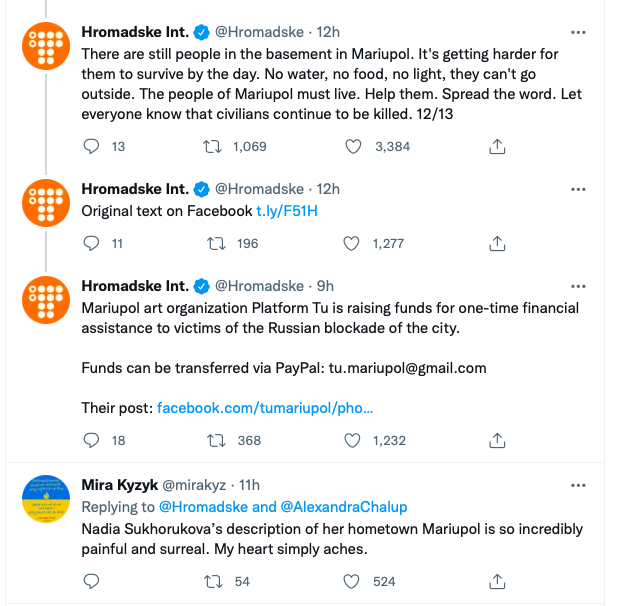
Reading comprehension: Nadia Sukhorukova survives in Mariupol.

Buenas tardes, estimados alumnos.


Despues de leer a Anastasiia se le queda a uno el cuerpo destrozado, ¿verdad? Pero, ¿miramos para otro lado o ayudamos en lo que podamos? En nuestro caso, nos toca analizar y saber qué está pasando de verdad. Y luego, actuar. 

">Hoy vamos a tratar el tema de las redes sociales, ergo, social media, en concreto, en el importante papel que está jugando como parte activa de la resistencia #resistance frente al invasor genocida ruso

Vamos a leer unos comentarios, terribles, que una increíblemente valiente mujer ucraniana, Nadia Sukhorukova, verde esperanza, ha subido a la red social Twitter, en la que describe fielmente qué está ella viviendo día a día en la asediada ciudad de Mariupol, probablemente, la ciudad más bombardeada del mundo hoy en día. 

Mariupol. Foto de Internet.
Foto de Internet


Después trabajaremos algunos aspectos gramaticales, de uso del lenguaje y temas para reflexionar.


TASKS:

1. Answer these questions:

1. When Nadia goes outside, are there bombs exploding outside? 
Yes, there are. /No, there aren't.
2. Why does Nadie have to leave her shelter?
3. Is the dog happy and relaxed? 
4. Is the dog crying?
5. What is the temperature outside?
6. Where are the people?
7. Is Nadia tired?


Questions:
Paragraph 3/13:
1) What has happened to the windows?
2) What do the curtains resemble?
3) Is Nadia sure she is going to die?

Paragraph 4/13:
1) What does she think will happen to her body?
2) What happened to the fire department?
3) Were there any survivors among the rescuers?

Paragraph 5/13:
1) Where are the remains of the people being put? 
2) Why?
3) Why will her body be buried?

Paragraph 6/13:
1) What is the courtyard covered with?
2) Why?
3) What happened to the building after the shelling?


Questions:
Paragraph 7/13:
1) Why does Nadia shudder?
2) What is the piece of metal lying on the yard?
3) Is Nadia afraid of living or dead people?

Paragraph 8/13:
1) How does Nadie guess that the bombs are going to fall again?
2) What is most predominant around her?
3) Is it windy at all?

Paragraph 9/13
1) Are there any more people around her outside?
2) Are they alive or dead?
3) Is she excited to see any more people?

Paragraph 10/13:
1) Are there any fires nearby? If so, where?
2) How is Nadia feeling?
3) Why and when will darkness fall again?

Paragraph 11/13:
1) Has she had another previous life? 
2) What is she feeling now?
3) What is happening to iron?


Questions:
Paragraphs 12 and13:
1) What is Nadia asking other people in the world?
2) Why?
3) Where are people in Mariupol surviving?
4) Do they have the basics to live?
5) How can you help fight the blockade of the city?

Task 2:
1) Look for a synonym of 'shake':
2) Find a verb whose definition is: 'tremble because you are cold or frightened'.
3) Look for a synonym of: burn slowly.
4) Look for a synonym of: crying.
5) Find a word whose definition is: 'hot bright stream of burning gas that comes from something that is on fire'.

Task 3: 
Make questions using the question word provided:
1) My heart simply aches. (what)
2) Mariupol art organization Platform Tu is raising funds for assistance to victims of the Russian blockade of the city. (Who) (Why)
3) The people of Mariupol must live. (Who)
4) I go back to the basement and listen to the ugly scrape of the iron. (Where) (Who) (What)
5) It was hit twice by a shell. (How many) (What..by)
6) One woman had her head torn off. (What) (Which part...)
7) The fire in the room burns as delicately as in a fireplace. (What) (where) (How) 

Saludos.


#standwithUkraine 
斯坦与乌克兰#
ستانويثوكرين#
#стаяць з украінай
#стою з україною
կանգնել Ուկրաինայի հետ
დაუდგეს უკრაინას
#stāvēt ar Ukrainu
#ukrayna ile durmak
стоять с Украиной#
د اوکراین سره ودریږئ
kusimama na ukraine
ယူကရိန်းနှင့်အတူရပ်တည်
우크라이나와 함께 서다
Украинамен бірге болыңыз
یوکرین کے ساتھ کھڑے ہیں
kiállni Ukrajnával
לעמוד עם אוקראינה
kū me Ukraine
યુક્રેન સાથે ઊભા રહો
σταθεί με την Ουκρανία
დაუდგეს უკრაინას
#stati uz ukrajinu
#stáť za ukrajinou
#stojijo z ukrajino
#Ukrainarekin egon zaitez
#seisoo Ukrainan kanssa
#qëndrojnë me Ukrainën
#mit der ukraine stehen
#ukraynanın yanında durun
#ယူကရိန်းနှင့်အတူရပ်တည်
#застанете с украйна
#stát s ukrajinou

18 mar 2022

English grammar test online for PACS.

Buenas tardes, estimados alumnos.

Os dejo a continuación un test de 25 preguntas sobre todos los aspectos gramaticales que hemos ido trabajando a lo largo del curso. 

¡Suerte!

16 mar 2022

Grammar: Making questions in English.

Buenas tardes, estimados alumnos.

Llueve levemente, pero lo suficiente para que el barro sahariano vuelva a la tierra que lo vio nacer. 

Ayer martes 15 estuvimos trabajando un poquito de gramática, en concreto, cómo hacer oraciones interrogativas, que seguro que alguna caerá en vuestro examen.

Podemos hacer preguntas cuya respuesta es 'si' o 'no', o si eres gallego, 'bueno, pues, depende', que tienen una estructura muy, muy fácil, o bien, podemos preguntar por datos concretos, como ¿por qué, cuándo, cómo, qué, quién, dónde, etc?

https://apnews.com/article/russia-ukraine-war-mariupol-descends-into-despair-708cb8f4a171ce3f1c1b0b8d090e38e3


Veamos algunos ejemplos de oraciones interrogativas de la prensa de hoy: 

Si nos fijamos en los colores rojo, azul y verde, nos indica qué tipo de palabra es y el orden que deben seguir en la oración, siempre fijo.

👉👉👉👉Vamos a jugar un rato con esta frase:

'Los refugiados de Ucrania llegaron ayer a la estación en el autobús de las 20:00.'

'The Ukranians refugees arrived at the bus station at 20:00 yesterday.'


Tanto colorín responde a todas las preguntas que, sobre esa frase, podemos hacer, en concreto, 6 preguntas (o más).

1) Who arrived at the bus station at 20:00 yesterday?

¿Quién llegó a la estación de autobuses ayer a las 8 de la tarde?

2) Where were the refugees from?

¿De dónde eran los refugiados?

3) When did the Ukrainians refugees arrive at the bus station?

¿A qué hora llegaron los refugiados a la estación de autobuses?

4) Where did the Ukrainians refugees arrive at yesterday?

¿Dónde llegaron los refugiados de Ucrania ayer?

5) How did the Ukrainians refugees arrive at the station yesterday?

¿Cómo llegaron los refugiados de Ucrania ayer a la estación?

6) What time did the Ukrainians refugees arrive at station yesterday?

¿A qué hora llegó el autobús con los refugiados de Ucrania a la estación ayer?


Y, ahora, os toca a vosotros: en la siguiente ficha tenéis que hacer preguntas con la partícula interrogativa que veréis al final de cada frase:


10 mar 2022

Reading comprehension: Sports and news

Buenas tardes, estimados alumnos.

Comenzamos una serie de ejercicios dedicados a revisar los puntos principales del programa del curso.

Hoy toca: Sports and news.

Nota: Los textos están seleccionados tanto del programa CREA como de otras fuentes, a quienes doy las gracias y cito, pero todos tienen el nivel del curso.

Texto nº 1:

A FALLEN CHAMPION

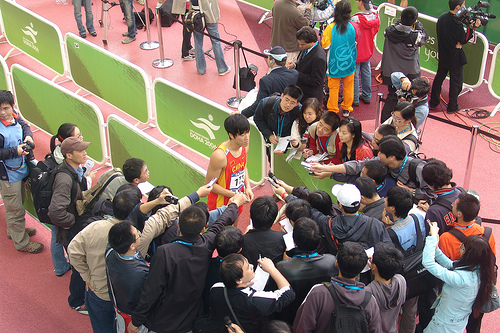
Liu Xiang

Imagen en Flickr de Nick Leonard bajo CC

Liu Xiang won the 110-meter hurdles gold medal in Athens 2004 and became a symbol for Chinese people. However, he couldn’t imagine what fate had in store for him.

All eyes in China were on Liu at the London Olympics, as he sought to redeem himself after not qualifying in his first-round heat at the Beijing 2008 Olympics. However, he didn’t qualify for the semifinals either. Fortunately, this time he got a sympathetic response, a stark contrast to the public outcry over his withdrawal from the Beijing 2008 Games.

Liu knocked over the first hurdle, injuring his right ankle and aggravating an Achilles tendon injury. Liu then hopped on his left foot down the remainder of the track in a symbolic completion of the race, pausing to kiss the final hurdle. This gesture surprised everyone at the stadium positively since in Beijing 2008 his abrupt withdrawal brought his coach, fans, and reporters literally to tears in the stadium. Chinese fans denounced him as a "coward" who should have finished the race before quitting. 

As Liu is already 29, he is not expected to compete in another Olympics but he still holds the world's second-fastest record after Cuba's Dayron Robles. This time only fate has been cruel to the great Chinese champion. 


Antes de traducir el texto nos gustaría hacer unas aclaraciones sobre expresiones que aparecen en el texto.

What fate had in store for him. Esta es una expresión hecha que viene a ser lo que en español queremos decir cuando decimos Lo que el futuro le tenía guardado o le depararía.

Heat tiene muchos significados, pero aquí significa prueba eliminatoria.

A stark contraststark suele ir con contrast para indicar que hay un contraste evidente.

Outcry es protesta pero aquí suena mejor decir clamor.

He is not expected to compete... Esto es una forma pasiva muy peculiar que significa No se espera que él compita...


Texto nº 2:

The Olympic Games.

The Olympic Games have been used as a platform to promote political ideologies almost from its beginning. Nazi Germany wished to portray the National Socialist Party as benevolent and peace-loving when they hosted the 1936 Games, though they used the Games to display Aryan superiority. Germany was the most successful nation at the Games, which did much to support their allegations of Aryan supremacy, but notable victories by African American Jesse Owens, who won four gold medals, and Hungarian Jew Ibolya Csák, blunted the message.

The Soviet Union did not participate until the 1952 Summer Olympics in Helsinki. Instead, starting in 1928, the Soviets organized an international sports event called Spartakiads. During the interwar period of the 1920s and 1930s, communist and socialist organizations in several countries, including the United States, attempted to counter what they called the "bourgeois" Olympics with the Workers Olympics. It was not until the 1956 Summer Games that the Soviets emerged as a sporting superpower and, in doing so, took full advantage of the publicity that came with winning at the Olympics.

Individual athletes have also used the Olympic stage to promote their own political agenda. At the 1968 Summer Olympics in Mexico City, two American track and field athletes, Tommie Smith and John Carlos, who finished first and third in the 200 meters, performed the Black Power salute on the victory stand. The second place finisher, Peter Norman of Australia, wore an Olympic Project for human rights badge in support of Smith and Carlos. In response to the protest, IOC president Avery Brundage told the United States Olympic Committee (USOC) to either send the two athletes home or withdraw the track and field team. The USOC opted for the former.

Currently, the government of Iran has taken steps to avoid any competition between its athletes and those from Israel. An Iranian judoka, Arash Miresmaeili, did not compete in a match against an Israeli during the 2004 Summer Olympics. Although he was officially disqualified for being overweight, Miresmaeli was awarded US$125,000 in prize money by the Iranian government, an amount paid to all Iranian gold medal winners.


Texto nº 3:

Broadsheets

Broadsheet refers to the most common newspaper format, which is typically 11 to 12 inches wide and 20 or more inches long. Many of the most respected newspapers - The New York Times, The Washington Post, The Wall St. Journal, and so on - are broadsheet papers. Broadsheet papers are usually six columns across.

Beyond their size, broadsheet papers tend to employ a traditional approach to news that emphasizes in-depth coverage and a sober tone in articles and editorials. 

Tabloids

In the technical sense, tabloid refers to a type of newspaper that typically measures 11 X 17 inches and is five columns across, narrower than a broadsheet newspaper. Since tabloids are smaller, their stories tend to be shorter than those found in broadsheets.

Tabloids also tend to be more irreverent and slangy in their writing style than their more serious broadsheet brothers. In a crime story, a broadsheet refers to a police officer, while the tabloid calls him a cop. And while a broadsheet might spend dozens of column inches on "serious" news - say, a major bill being debated in Congress - a tabloid is more likely to zero in on a heinous sensational crime story or celebrity gossip

In fact, the word tabloid has come to be associated with the kind of supermarket checkout aisle papers - such as the National Enquirer - that focus exclusively on splashy, lurid stories about celebrities.


Saludos y nos vemos la semana próxima, Dios mediante.


Reading comprehension: Arts, museums and culture

Buenas tardes, estimados alumnos.

Comenzamos una serie de ejercicios dedicados a revisar los puntos principales del programa del curso.

Hoy toca: Arts, museums and culture.

Nota: Los textos están seleccionados tanto del programa CREA como de otras fuentes, a quienes doy las gracias y cito, pero todos tienen el nivel del curso.

Texto nº 1:

Do you want me to get your ticket?

Joe: So,what shall we do today?

Peter: I’d like to go to the video games exhibition at the MOMA*.

Joe: Oh, no, I don’t fancy that.

Peter: Oh, go on. I really want to see it. There's Pac-Man and Space Invaders. And I’d love you to come with me.

Joe: Oh, alright. How much is it?

Peter: Let me check on internet. Right, it’s $8, but there's a discount for pensioners -only $5.

Joe: I’d prefer it if we went a bit later, at 6 o’clock.

Peter: Great, I’ll see you there at 6. Do you want me to get you your ticket?

Joe: OK, and I’ll pay for pizza afterwards.

Peter: See you there.

*MOMA: Museum of Modern Art


Texto nº 2:


Friendlies

Imagen en Flickr de moriza bajo CC

A: What are you up to?

B: Nothing much. I'm bored.

A: Well, let's do something fun. What about going to the swimming pool?

B: No, that's too tiring.

A: OK, I know, let's go to the cinema.There's a new film, Tarantula. It's supposed to be really frightening.

B: Too frightening, I heard. Mary said she was scared to death. Anyway, I haven't got any money.

A: You're not exactly being very positive, are you? 

B: Well, sorry,it's just so boring here.

A: Well, let's do something fun then!


https://stacker.com/stories/12763/pablo-picasso-life-story-you-may-not-know


Texto nº 3:


Pablo Picasso: The life story you may not know

Pablo Picasso was an unrivaled titan of 20th-century art. He influenced and collaborated with such fellow creative geniuses as Henri Matisse and Georges Braque, and the works of his Blue Period and his Rose Period are familiar to even the most casual museum-goer.

In politics, Picasso took an unwavering stand against fascism in his homeland. After a visit in 1934, he vowed not to return to Spain so long as the dictator General Francisco Franco was alive, and he never went home again. In joining the French Communist Party, he declared: “I have always been an exile, now I am one no longer; until the time when Spain may finally receive me, the French Communist Party has opened its arms to me.”

His giant masterpiece “Guernica” makes a stronger case against war than many a written word or argument. Less well known is Picasso’s poetry, an art form in which he immersed himself before the Spanish Civil War broke out and so deeply affected him. He penned plays as well, and he created stage sets and wardrobe costumes for ballet productions in Paris.

With so many facets to Picasso’s enormous creativity and profound influence, Stacker compiled a list of events and facts from his life that you may not know, drawing from historical chronicles, museum archives, biographies, and articles in the media.

Saludos y nos veremos la próxima semana, Dios mediante.

Master Your Future: English for FP Dual

Your Future in Sports Starts Here (2)

English for Sports VET - Andalusia ...