Buscar en este blog

10 mar 2022

Reading comprehensión: Work, training and education. Glosary included

Buenas tardes, estimados alumnos.

Comenzamos una serie de ejercicios dedicados a revisar los puntos principales del programa del curso.

Hoy toca: Work, training and education.

Nota: Los textos están seleccionados tanto del programa CREA como de otras fuentes, a quienes doy las gracias y cito, pero todos tienen el nivel del curso.


https://www.freepik.es/foto-gratis/mujer-cansada-trabajando-tarde-plazo_15420088.htm

Texto nº 1:

Frida´s new job

Less than fifty per cent of the working population in UK has a full time, long term job with a permanent employment contract. People are now attracted to or forced into part-time work, self-employment, temporary employment, job sharing and freelance contracts. And this is happening all over Europe.

The "job for life" is dead. Our parents and grandparents may have found jobs which offered them security and a regular salary, but the whole economic climate has changed. Frida Wells, unemployed, gave up on her teaching career and tells us about her new job:

"I´ve always enjoyed photography and it is something where you learn a lot from experience. I graduated in French and German but I couldn´t find a job as a teacher. I was feeling very frustrated and depressed. My friends thought my pictures were good and encouraged me to try and make a living at it. I started in October and I´m getting confidence and contacts. I have also helped other photographers. At the moment I´m developing my own style so that I can get work doing album covers and magazine photography. I like doing portraits and I enjoy black and white photos, but what I really like best is colour work".


🔟 Palabras Clave del Texto

No.English Word/Phrase (Inglés)Spanish Translation (Español)
1Working populationPoblación activa / Población ocupada
2Long term jobTrabajo de larga duración
3Permanent employment contractContrato de trabajo indefinido / permanente
4Self-employmentTrabajo autónomo / Por cuenta propia
5Job sharingCompartir puesto de trabajo
6Freelance contractsContratos de autónomo / independiente
7Economic climateClima económico / Situación económica
8UnemployedDesempleada / En paro
9Make a livingGanarse la vida
10Developing my own styleDesarrollando mi propio estilo

Texto nº 2:

Do you have any previous work experience?

Interviewer: So, you apply for the Saturday position, right?

Jason: Yes, I do.

Interviewer: Can you tell me why do you reply to our advertisement?

Jason: Well, I was looking for a part-time job to help me through university. And I think that I´d be good at this kind of work.

Interviewer: Do you know exactly what you have to do as a shop assistant?

Jason: Well, I imagine I must help customers or check the supplies in the shop.

Interviewer: Yes, you must also keep the front of the shop tidy. What qualities have you got to be a shop assistant?

Jason: I´m hard-working and very responsible. I´m also optimistic and a reliable person among my friends.

Interviewer: Do you have any previous work experience?

Jason: Yes, I worked part-time at a take-away in the summer holidays. 

Interviewer: OK. That´s all. Thank you for coming along the interview. We´ll make our decision next week.


https://orientacion-laboral.infojobs.net/preguntas-entrevista

🔟 Palabras Clave del Texto

No.English Word (Inglés)Spanish Translation (Español)
1InterviewerEntrevistador(a)
2ApplyPostularse / Solicitar (un puesto)
3AdvertisementAnuncio (publicitario)
4Part-timeA tiempo parcial
5Shop assistantDependiente(a) / Auxiliar de tienda
6SuppliesSuministros / Existencias
7TidyOrdenado(a) / Arreglado(a)
8Hard-workingTrabajador(a) / Esforzado(a)
9ResponsibleResponsable
10ReliableConfiable / Fidedigno(a)


Texto nº 3:

Director of fun.


A 6-year-old boy, Sam Pointon, who wanted to become the director of York´s National Railway Museum got himself a job - as the director of fun.
    The ambitious child got a plum role at the National Railway Museum after applying to replace retiring boss Andrew Scott.
    Sam sent a handwritten letter headed "Application for director" asking for an interview at the centre, in York. The letter listed his credentials for the role, including his expertise on his train set.
    "I am only 6 but I think I can do this job. I have an electrick (sic) train track. I am good on my train track. I can control two trains at once" he wrote.
    The museum staff was so impressed that they appointed Sam an honorary "Director of Fun" and his job will be to show how he thinks they can ensure the museum is the most fun place for kids to spend a day out.
    Mr. Scott said that Sam´s letter was a real delight to read, so it was a pleasure to offer him the position.


🔟 Palabras Clave del Texto

No.English Word/Phrase (Inglés)Spanish Translation (Español)
1Director of FunDirector de Diversión
2AmbitiousAmbicioso
3Plum rolePuesto codiciado / Puesto de lujo
4Retiring bossJefe que se jubila
5HandwrittenEscrita a mano
6HeadedEncabezada (con el título)
7CredentialsCredenciales / Méritos
8ExpertisePericia / Experiencia (en un tema)
9ImpressedImpresionados
10HonoraryHonorario(a)
Saludos y nos veremos la próximas semana, Dios mediante.

Reading comprehension: Money and consumerism

Buenas tardes, estimados alumnos.

Comenzamos una serie de ejercicios dedicados a revisar los puntos principales del programa del curso.

Hoy toca: Money and consumerism.

Nota: Los textos están seleccionados tanto del programa CREA como de otras fuentes, a quienes doy las gracias y cito, pero todos tienen el nivel del curso.


Texto nº 1

THE CREDIT CARD KID

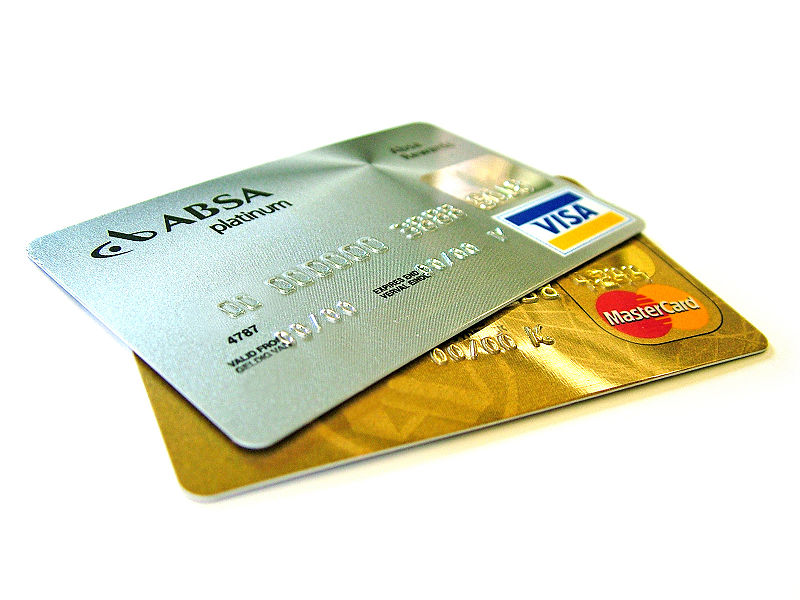
Walter Cavanagh owns 1,497 active credit cards valued at $1.7 million. Aside from holding the world record for the most number of credit cards, he also owns the world's longest wallet, measuring 250 feet in length and 38 pounds in weight, with a capacity to hold 800 cards. Dubbed  "Mr. Plastic Fantastic" by the Guinness Book of World Records, Walter has been listed in the book annually since 1971. Cavanagh has been tracking directories of US businesses to send as many credit card applications as he can. 

Credit cards

Imagen en Wikimedia Commons
de Lotus Jefe bajo CC

His fascination with credit cards all started in the later 1960s when he and his pharmacist colleague in California vied to collect the most credit cards to win a bet, the price of which was a fancy dinner. Cavanagh, who was fresh from Peace Corps at that time, was able to collect 143 cards by year end, defeating his friend who just collected 138. This feat earned him his first Guinness Book title.
He used to apply for one or two cards a week. There was even a time when he applied for 300 cards in just one month. He sometimes unknowingly applied for a card he already owned. When his application was declined, he would send a letter to the issuer explaining his purpose for seeking credit card approval, which is to maintain his world title. All of his credit card applications were accepted except one for J.J. Newberry. His application was denied in the early 1970s by the company when a large number of cards had been already amassed by Cavanagh. Four decades later, Cavanagh still doesn't own a Newberry credit card. 

The retired financial planner used to take his collection with him wherever he traveled. One got him into trouble when it set off a metal detector in a Texan airport. His briefcase was inspected by the guards and hundreds more were found. The culprit was the sterling silver credit card issued by the defunct Mapes Hotel, the first casino hotel in Reno. The card, a collector's item, grants unlimited credit privileges, said Cavanagh. 

Trap

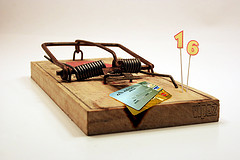
Imagen en Flickr de v i p e z bajo CC

His credit cards were issued by various establishments such as ice cream stores, airlines, bars and gas stations. His cheapest credit card has a maximum credit of $50. From green cards to gold cards, Cavanagh has the most diverse collection of credit cards. His cards come from every state in the Union and some even come from foreign countries like Canada, the UK, Germany, Norway and Mexico.
All of his 1,497 cards are valid. But Cavanagh only uses one of them and keeps the rest in a safe-deposit box. The majority of his cards have never been used or signed by him. He pays his due on time, which gives him an almost perfect credit score.
"Never use a card to buy anything you can't pay off in a couple of months", he says. " If you don't have the discipline, you shouldn't have the cards"


Texto nº 2:

Saving time by Shopping Online

With the rise of the internet is it unsurprising that retailers have jumped on the opportunity to offer goods online whenever they can. Reaching a far wider group of people, clever online campaigns can be used by retailers to advertise their goods as much as possible. While retailers benefit, shopping online also offers you and me, the consumers on the street a huge range of benefits as well. 

One of the best reasons to shop online is the ability to save time. Modern lives are considered to have become very busy, with work and leisure activities quickly taking over all the hours of the day. While some lucky guys may love nothing more than to hit the high street and shop, others simply don't have the time as they are too busy with their families or with work. This is where online shopping is becoming increasingly important as valuable time which can be put to better use elsewhere may be saved. 

A major benefit is that no travel time is needed if you want to shop online. While an entire morning may need to be set aside for grocery shopping, browsing the internet before buying goods can be done in an instant. It can be done within the comfort of your own home, meaning that it can be done at any time of day whenever you get a spare moment. Search options are also assumed to reduce shopping time significantly. Whereas in a shop you have to browse through items, in an online store you can instantly look for what you need and want. Prices are often cheaper too, with online retailers not having to pay large overhead expenses for brick-and-mortar shops and many retailers such as M and M, direct discount vouchers can be found. And with search options often offering categories, pricing ranges, sizes, or quantities, life can be made much quicker and easier 

Over the past few years food shopping online has become particularly popular, with a range of both high street and online retailers offering delivery services. This is expected to be a brilliant way of saving time as not only can you get your items delivered, but many websites provide online baskets which will remember the foods bought previously. A weekly shop can then be done by simply reordering a standard basket, taking only a few minutes of your valuable time. 

Online clothes' shopping can also save a huge amount of time, and while you may believe that the returns procedure is complicated, many stores have taken steps to make it as easy as possible. Valuable time can be saved by utilising search facilities available on websites, allowing you to search for garments by size, colour, prices, or even brand. A number of websites style guides are also offered, a great benefit if you find a top you like but are not sure of a suitable pair of trousers for example. Meanwhile, by shopping at online outlets such as M and M, direct discount codes can be found and the returns process is often free and as easy as simply filling out a small coded sheet and popping items into the post. And for anyone who is pushed for time and would rather spend valuable moments enjoying their family and hobbies, online shopping is considered to be a fantastic time saving opportunity.


https://www.caracteristicas.co/publicidad/


Texto nº 3:


ADVERTISING

As the economy expanded during the 19th century, advertising grew alongside. In the United States, the success of this advertising format eventually led to the growth of mail-order advertising. In 2010, spending on advertising was estimated at $142.5 billion in the United States and $467 billion worldwide. 

In June 1836, the French newspaper La Presse was the first to include paid advertising in its pages, allowing it to lower its price and extend its readership.The formula was soon copied by all titles. Around 1840, Volney B. Palmer established the roots of the modern day advertising agency in Philadelphia. In 1842 Palmer had large amounts of space traded in various newspapers at a discounted rate then resold the space at higher rates to advertisers. The actual ad - the copy, layout, and artwork - was still prepared by the company wishing to advertise; in effect, Palmer was a space broker. By 1900 the advertising agency had become the focal point of creative planning, and advertising was firmly established as a profession. 

At the turn of the century, there were few career choices for women in business; however, advertising was one of the few available. Since women were responsible for most of the purchasing done in their household, advertisers and agencies recognized the value of women's insight during the creative process. In fact, the first American advertising to use a sexual sell was created by a woman - for a soap product. Although tame by today's standards the advertisement featured a couple with the message "The skin you love to touch". 

Modern advertising was created with the innovative techniques used in tobacco advertising beginning in the 1920s, most significantly with the campaigns of Edward Bernays, who is often considered as the founder of modern Madison Avenue advertising. 

Advertising has gone through five major stages of development: domestic, export, international, multi-national, and global. For global advertisers, there are four, potentially competing, business objectives that must be balanced when developing worldwide advertising: building a brand while speaking with one voice, developing economies of scale in the creative process, maximising local effectiveness of ads, and increasing the company's speed of implementation. Commercial advertisers often seek to increase consumption of their products or services  through "branding", which involves the repetition of an image or product name in an effort to associate certain qualities with the brand in the minds of global consumers.If they have their image broadcast on TV, the radio, in the press, it helps it to stick in consumers' minds. 

While advertising can be seen as necessary for economic growth, it is not without social costs. Unsolicited commercial e-mail and other forms of spam have become so prevalent as to have become a major nuisance to users of these services. Advertising is increasingly invading public spaces, such as schools, which some critics argue is a form of exploiting children . In addition, advertising frequently uses psychological pressure (for example, appealing to feelings of inadequacy) on the intended consumer, which may be harmful. Many even feel that, often, advertisements exploit the desires of a consumer, by making a particular product more appealing, or by manipulating the consumers' needs and wants.


Saludos y nos veremos la próxima semana, Dios mediante.

Reading comprehension: Leading a healthy life.

Buenas tardes, estimados alumnos.

Comenzamos una serie de ejercicios dedicados a revisar los puntos principales del programa del curso.

Hoy toca: Leading a healthy life.

Nota: Los textos están seleccionados tanto del programa CREA como de otras fuentes, a quienes doy las gracias y cito, pero todos tienen el nivel del curso.


https://www.freepik.es/fotos-premium/gente-triste-sentada-dormitorio-sujetandose-frente-mientras-tiene-dolor-cabeza_4062411.htm


Texto nº 1

Vegans, vegetarians and omnivores 

To understand everything easily, we tend to classify, to name things in such a way that we know what to expect. We do it even according to what we choose to live on. There are vegetarians, omnivores, vegans, etc.

From a vegetarian point of view, an omnivore eats all types of food, including fish, flesh, fruit and vegetables, without the slightest concern about how that food is produced. Vegetarians strongly believe that if omnivores knew how animals are bred and slaughtered, they would probably become vegetarians.

For people who eat meat, a vegetarian is someone who eats plants, basically vegetables and fruit, and all vegetarians are the same. However, many vegetarians also eat products coming from animals. If they eat cheese, yoghurt or drink animal milk, they are still called vegetarians. The idea is that to obtain this food, no animal is killed. That is one of their deepest worries.

And there are also vegans or radical vegetarians. If a vegetarian refuses to eat not only meat but also eggs, dairy products and all other animal-derived ingredients, he or she is called vegan. In addition, most vegans do not use anything coming from animals, including leather, fur or wool. That is why they are sometimes called radical vegetarians, but what most clearly defines them is a profound respect for animal rights.

There are also pescatarians, raw vegetarians, flexitarians.

Note: enjoy life, eat as many different types of food as possible and do not be stupid.

🔟 Palabras Clave del Texto

No.English Word/Phrase (Inglés)Spanish Translation (Español)
1OmnivoresOmnívoros
2FleshCarne (músculo animal)
3Slightest concernLa más mínima preocupación
4BredCriados
5SlaughteredSacrificados / Matados
6Dairy productsProductos lácteos
7Animal-derived ingredientsIngredientes derivados de animales
8LeatherCuero
9Profound respectProfundo respeto
10Animal rightsDerechos de los animales

Texto nº 2:

Slow Food 

Everyone knows what fast food is but, have you heard of slow food? You may think that I am joking but there is a Slow Food Movement which aims to preserve cultural cuisine and in so doing to preserve the food plants and seeds, domestic animals and farming within a region. 

The Slow Food movement has its origins in the 1980s in Italy.  When McDonald’s planned to build an franchise outlet near the Piazza di Spagna in Rome in 1986, Carlo Petrini organised a demonstration in which he and his followers brandished bowls of macaroni as weapons of protest. Their demonstration was successful and in 1989 Carlo founded the International Slow Food Movement which is against  fast food, fast life, non-sustainable food production and the destruction of local economies. He has written a number of books on Slow Food,  providing convincing arguments to persuade us to watch what, and how, we consume.

One of the key tenets of Slow Food is the belief in the right to pleasure, to really enjoy what we eat. They encourage people to consider every meal a social event based around the  preparation and consumption of food among friends and family.

Another important component of the Slow Food movement is the commitment to educating children about the origins and taste of food, to help them to have a connection to the food they eat. It aims to help children develop their senses and their appreciation of food and the pleasure of eating as a gastronomic and social event.

Next time you sit down at a table to eat, don't wolf your food down but think about how you could turn a daily habit into a moment of pleasure and health.

Palabras Clave del Texto

No.English Word/Phrase (Inglés)Spanish Translation (Español)
1Slow Food MovementMovimiento Slow Food
2PreservePreservar / Conservar
3Cultural cuisineCocina cultural / Gastronomía cultural
4FarmingAgricultura / Cultivo
5Franchise outletFranquicia / Establecimiento franquiciado
6BrandishedBlandieron / Agitaron (en señal de protesta)
7Non-sustainableNo sostenible
8Convincing argumentsArgumentos convincentes
9TenetsPrincipios / Dogmas
10Wolf your food downTragar la comida / Devorar la comida


https://www.planetatriatlon.com/fallece-dick-hoyt/


Texto nº 3:

Team Hoyt

The image that we associate with sports is athletic perfect bodies and of course we think of top sportsmen. However, there so many incredible moving stories of amateur athletes and personal sacrifices.

Rick Hoyt was born in 1962 to Dick and Judy Hoyt and as a result of oxygen deprivation to Rick's brain at the time of his birth, he has cerebral paralysis. Although they were told that there was little hope for their son to live a "normal" life, they fought for his inclusion in community, sports, education and workplace by making everyone look beyond his physical limitations. Years later he attended Boston University, and he graduated with a degree in Special Education in 1993.

In the spring of 1977, he told his father that he wanted to participate in a 5-mile benefit run for a Lacrosse player who had been paralyzed in an accident. They did it. That night, he told his father, "Dad, when I'm running, it feels like I'm not handicapped."

This was just the beginning of what would become over 1,000 races completed, including marathons and triathlons. He rode a special two-seater bicycle, or swam with Rick on a boat and a cord attached around his waist, or pushed his wheelchair. They even biked and ran across the U.S. in 1992, completing a full 3,735 miles in 45 days. The 2009 Boston Marathon was officially Team Hoyt's 1000th race. Neither Dick or Rick were ready to retire yet.

Rick was once asked, if he could give his father one thing, what would it be? Rick responded, "The thing I'd most like is for my dad to sit in the chair and I would push him for once.

🔟 Palabras Clave del Texto

No.English Word/Phrase (Inglés)Spanish Translation (Español)
1Oxygen deprivationPrivación de oxígeno
2Cerebral paralysisParálisis cerebral
3Fought forLucharon por
4InclusionInclusión
5Physical limitationsLimitaciones físicas
6Benefit runCarrera benéfica
7ParalyzedParalizado
8HandicappedDiscapacitado / Con discapacidad
9TriathlonsTriatlones
10Two-seater bicycleBicicleta de dos asientos / Tándem

Saludos y nos veremos la próxima semana, Dios mediante.

Reading comprehension: Scientific elements.

Buenas tardes, estimados alumnos.

Comenzamos una serie de ejercicios dedicados a revisar los puntos principales del programa del curso.

Hoy toca: Scientific elements.

Nota: Los textos están seleccionados tanto del programa CREA como de otras fuentes, a quienes doy las gracias y cito, pero todos tienen el nivel del curso.

https://www.quimica.es/noticias/1167623/un-raro-metal-vtreo-descubierto-durante-la-bsqueda-para-mejorar-el-rendimiento-de-la-batera.html


Texto nº 1:

Graphene, the new wonder element? 

Many people consider graphene, a form of carbon that comes in sheets just one atom thick, a wonder material. It is the best conductor of heat at room temperature and is 40 times stronger than steel. As a semiconductor, its electrical conductivity is 1,000 times better than that of silicon. This means engineers could use it to make devices far more sensitive than is possible now, leading some to predict that it will one day become the ideal material for computer chips. Andre Geim and Konstantin Novoselov, two physicists who were investigating the structure of graphene, won the 2010 Nobel prize for their work. 

However, converting the wonders of graphene into products has been difficult. Frank Koppens at the Institute of Photonic Sciences in Barcelona thinks he may have found a way to do so. As he describes in "Nature Nanotechnology"*, he believes he can use graphene to make low-cost ultra-sensitive photodetectors. Photodetectors are devices which convert light into electricity. They are used in digital cameras and telecommunications.So we may be seeing the future of electronics right now.


Texto nº 2:

The transit of Venus 

One of the first joint scientific ventures was carried out in 1761- scientists hoped to be able to measure the Transit of Venus (which occurs twice with an interval of 8 years then no more for a century). If it was measured from selected points on earth, scientists would be able to calculate the distance from the Earth to the Sun, and so to calibrate distances to all other bodies in the solar system. In 1761, scientists from Britain, France, Sweden Russia, Italy and Germany set out to different parts of the globe from which to measure the transit. Guillaume le Gentil of France began his journey in 1760, but due to various problems, was still at sea at the time of the transit, and a ship is the worst place for calibrating.

Undaunted, he went on to India, spent 8 years preparing a new viewing station and tested and retested his instruments. On the day, just as Venus began to pass, a cloud appeared over the sun for the entire duration of transit, so he saw nothing. He returned to France and discovered that his relatives had declared him dead in his absence and taken all his property! 


Unfortunately, the scientists produced too much information, and much of it was contradictory. This was the reason for Captain Cook's later voyage to Tahiti. With Cook's measurements, the Frenchman Joseph Lalande calculated a mean distance of 150 million km (nowadays known to be 149,597,870,691 km). The last transit of Venus was 5th-6th June 2012, and the next one will be in 2117.


https://www.elconfidencial.com/tecnologia/ciencia/2022-02-10/asombrosas-fotos-venus-revelan-datos-superficie_3373159/

Texto nº 3:


Double stars 

When is a star not a star? When it's two stars! A double star is when two stars are so close together that they appear to be one when seen from the Earth via an optical telescope. Surprisingly, one of the greatest living observers of double stars isn't an American working for NASA but a retired history teacher. Jose-Luis Comellas, former lecturer in Modern History at the University of Seville, has observed well over 5,000 double stars using a simple telescope in his home-made observatory in Mairena del Alcor. His books, especially his Guíde to the Firmament, has inspired thousands of amateur astronomers to scan the heavens every night. There is now a street named after him in Seville, and an observatory in the town of La Rinconada.


Saludos y nos veremos la próxima semana, Dios mediante.


Reading comprehension: Scientific issues.

  Buenas tardes, estimados alumnos. 

Comenzamos una serie de ejercicios dedicados a revisar los puntos principales del programa del curso.

Hoy toca: Scientific issues.

Nota: Los textos están seleccionados tanto del programa CREA como de otras fuentes, a quienes doy las gracias y cito, pero todos tienen el nivel del curso.


http://nudoss.com/barco/norwegian-star/barco-cruceros-norwegian-star-sala-videojuegos-arcade/


Texto nº 1

                                            Gamelab

Spain, where there are approximately 15 million video game players, is in fourth place inthe European market in video games and  sixth  in the world. 


That´s the reason why Gamelab Barcelona, the main showcase of the sector, which comprises more than 200 firms and 3,000 professionals, is held annually. The participants include companies such as Playstation, Microsoft, Nintendo, EA, Konami, Playfish and Pixar, among others. 


But there are also a great number of students, who usually come from technical and creative university degrees, in search for an opportunity  to work for big companies and collaborate for them. 


Ian Livingston, whose creation Tomb Raider had a worldwide reputation, is one of the several major professionals who come to Gamelab every year. He enjoys participating in Gamelab, and thinks that video games also bring new business opportunities for other digital contents, which are not really found in other international events. 

So if you like video games and you are good at designing them, this is the place- don´t miss it!


Texto nº 2:

HACKERS

"Hacker" is a word which was first coined in the 1960´s, when a person could solve software-related problems. 

 
The typical hacker is a young person (19-30) who identifies with technology. Also, they are believed to be  intelligent, self-confident, highly motivated and willing to take up challenges. 

However, the notion of "hacker" has been recently reversed, in a society where data security and the stability of the infrastructure of companies and governments have become major concerns. 

Today, the hacker is the perfect concept of an enemy, whose goals are, among others, fighting against censorship, security cryptography and creating systems, tools and applications that can be used by everybody.


Texto nº 3:

The History Of WhatsApp


Whatsapp’s history needs to be heard as it is not like any usual startup story where the founders had an idea that made them drop out from their colleges, build a team, and get pre-seed funding from a giant like Facebook or Google. WhatsApp was conceptualised not by college students but by people who were in their thirties and had a stable job with a renowned company.

The internet messaging application was conceptualised because of an actual need (democratising phone-based communications), and it succeeded because it was able to capitalise on almost every emerging trend like push notifications and need like encryption.

The best part?

Even after ten years of existence, the company still boasts its no ads, no games, and no gimmicks principle while making millions in revenue.

Here’s a brief history of WhatsApp explaining its conceptualisation, the initial WhatsApp business model, and the new WhatsApp business model after Facebook bought it.

Who Founded WhatsApp?

Brian Acton and Jan Koum founded WhatsApp in 2009 after they left their job at Yahoo!.

The startup story began when they left their job to travel around the world. But soon, their savings started to sink, and they had to apply for a job on Facebook, which didn’t work out as planned as well. They were quite disappointed, but this failure led them to start a new life journey – WhatsApp.

Saludos y nos veremos la semana que viene, Dios mediante.

Reading comprehension: Natural world, going green.

Buenas tardes, estimados alumnos.

Comenzamos una serie de ejercicios dedicados a revisar los puntos principales del programa del curso.

Hoy toca: Natural world, going green.

Nota: Los textos están seleccionados tanto del programa CREA como de otras fuentes, a quienes doy las gracias y cito, pero todos tienen el nivel del curso.

https://pxhere.com/es/photo/982282

CÓDIGOS DE COLORES:

AZUL: Traducciones.

ROJO: Aspectos gramaticales.

VERDE: Aspectos culturales.

NARANJA: Estructuras concatenadas

MORADO: Traducción y sinónimos, antónimos, etc.

Amarillo: Palabras con trampa.

Os dejo una plantilla para que, sobre la marcha, podáis ir completando con sinónimos, antónimos, etc y los significados. Espero que os sea de utilidad. Pinchad aquí para descargarla.  


https://parquesalegres.org/biblioteca/blog/reciclar/


Texto nº 1:

Barry's house

Barry está preocupado con el medioambiente y abajo puedes conocer sus planes para el futuro cercano y sus razones para ser ecologista. Fíjate en las frases subrayadas. 

I'm going green from now on....

When it comes to the environment, being a good global citizen starts at your doorstep. From recycling to using alternative cleaning materials, minor changes at home can add up to real benefits for the planet, not to mention your own health and happiness.

It may be a cliché, but the best way to be Earth-friendly is to cut down on what you consume and recycle whenever you can. The U.S. generates about 208 million tons of municipal solid waste a year, according to the National Institutes of Health. That's more than 4 pounds per person per day. Every little bit helps; recycling just one glass bottle saves enough electricity to light a 100-watt bulb for four hours.

Here are 5 easy ways I've planned to green my home in the next few weeks:

1. Greening up my appliancesI am getting rid of that old refrigerator in the garage. It can save me as much as $150 a year, according to the Environmental Protection Agency. Appliance use comprises about 18% of a typical home’s total energy bill, with the fridge being one of the biggest energy hogs. If any of our appliances is more than 10 years old, the EPA suggests replacing them with energy-efficient models that bear their "Energy Star" logo.

2. Saving waterI'm putting an aerator on all household faucets, so that I can cut my annual water consumption by 50%. Behavioral changes also add up quickly: using a broom instead of the garden hose to clean your driveway can save 80 gallons of water and turning the water off when you brush your teeth will save 4.5 gallons each time.

3. Cleaning green: I'm using simple eco-friendly ingredients such as plain soap, water, baking soda (sodium bicarbonate), vinegar, washing soda (sodium carbonate), lemon juice and borax. They also perform effectively and I can save money at the same time.

4. Reducing plastics, reducing global warming:  I'm reducing, re-using and recycling my plastics for one of the best ways to combat global warming. Each year, Americans throw away some 100 billion polyethylene plastic bags, the processing and burning of which is considered one of the main contributors to global warming.

5. Saving a tree, using less paperI'm buying "tree-free" 100% post-consumer recycled paper for everything from greeting cards to toilet paper. Paper with a high post-consumer waste content uses less virgin pulp and keeps more waste paper out of landfills.


Texto nº 2:

VEGGIE PRIDE DAY

The Veggie Pride is an international event that celebrates and promotes vegetarianism and veganism.

It's held annually in Paris since 2001, but later also has been emulated in other cities in the world. It brings together vegetarians and vegans who want to show their pride to refuse to eat animals, and denounce the discrimination which they suffer, both personally and in terms of expressing their ideas.The Veggie Pride aims to encourage vegetarians to affirm their convictions and to bring the society to accept the debate on the legitimacy of the consumption of animals.

The first Italian Veggie Pride was held in Rome on 17 May 2008 and was attended by about 700 people. In 2009, the Veggie Pride was held on May 16 simultaneously in Birmingham, Lyon, Milan and Prague.

https://www.sancristobalsl.com/blog/reciclando-en-familia/


Texto nº 3

Tips: Top Ten Ways to Recycle


 Office Depot has compiled a list of the top 10 ways to recycle at home and in the office.

  1. Buy recycled paper and print on both sides. When using paper in the office, print on both sides of the sheet and recycle the paper when you are finished. By recycling one ton of paper, you can save 17 trees, almost 7,000 gallons of water and more than three cubic yards of landfill space.
  2. Recycle your outdated technology. According to EPA, Americans throw out two million tons of e-waste each year. Avoid adding to that waste by recycling your old technology. For more information on electronic recycling, visit http://www.epa.gov/epaoswer/hazwaste/recycle/ecycling/donate.htm.
  3. Make recycling bins readily available. Make sure your home and office are outfitted with recycling bins for paper, plastic and metal. Keep them out in the open and label them appropriately. Sometimes the convenience factor is all that is needed. 
  4. Recycle your empty ink and toner cartridges. Almost eight cartridges are thrown out in the United States every second of every day. That's almost 700,000 cartridges per day. 
  5. Buy remanufactured ink and toner cartridges. Each remanufactured cartridge keeps approximately 2.5 pounds of metal and plastic out of landfills and saves about a half gallon of oil. 
  6. Recycle old newspapers laying around the office. When finished reading the newspaper, either leave it for someone else to read or recycle it. 
  7. Look for the recycled option in all the products you buy. It's not just paper that is recycled. 
  8. Buy rechargeable batteries. It takes 1,000 regular batteries to equal the lifespan of one rechargeable battery. When you are discarding your batteries, recycle them. 
  9. Purchase rewritable CDs and DVDs so that you can reuse them from project to project
  10. Reuse your morning coffee cup. Or better yet, buy a mug to avoid the waste caused by throwing away the paper or Styrofoam.
Saludos y nos veremos la semana que viene, Dios mediante.

Master Your Future: English for FP Dual

Your Future in Sports Starts Here (2)

English for Sports VET - Andalusia ...